After a decade-long wait, Dragon's Dogma 2 finally arrived in 2024, rekindling the passion of fantasy RPG enthusiasts worldwide. The sequel not only lived up to its cult-classic predecessor but also expanded the scale of its open world, combat intricacy, and the beloved Pawn system. Now in 2026, with whispers of a third installment growing louder, I can't help but reflect on what made Dragon's Dogma 2 so unique – and what it sacrificed in the process. The Pawn system remains a brilliant innovation, seamlessly blending single-player immersion with asynchronous multiplayer connectivity. Yet as I venture through other modern RPGs, I feel the franchise's next chapter must evolve this feature to include genuine companion depth.
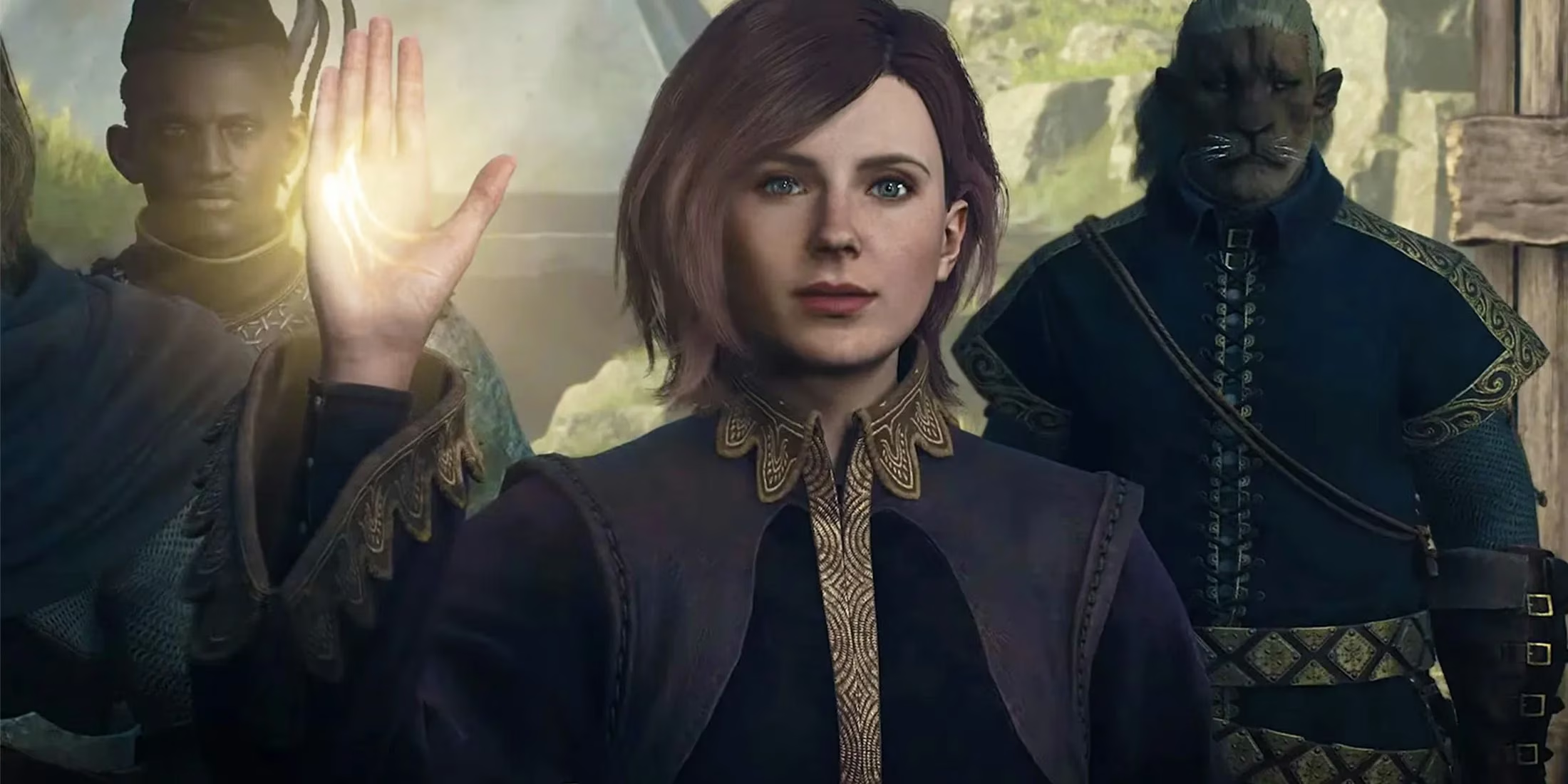
The Pawn mechanic debuted in 2012 and instantly set Dragon's Dogma apart. Instead of a fixed party of fleshed-out characters, you create a main Pawn who accompanies you throughout the journey, supplemented by two hired Pawns drawn from other players' worlds. These ethereal, humanoid allies lack personal backstories but possess customizable vocations, inclinations, and knowledge gained from their travels with other Arisen. In Dragon's Dogma 2, Capcom refined this formula by adding new specialist roles like the Trickster and Wayfarer, Pawn quests, and even reactive dialogue that references shared experiences. The result is a system where your party feels dynamic and infinitely adaptable, a living testament to a global community of players.
However, every design choice has a trade-off. By doubling down on Pawns, Dragon's Dogma 2 completely removes traditional companions – characters with emotional arcs, loyalty quests, and meaningful relationships that shape the narrative. When I look back at my time with the game, I remember epic griffin takedowns and the eerie beauty of Battahl, but I can't name a single Pawn who left a lasting impression. They are functional, replaceable, and ultimately forgettable. This absence is glaring when compared to the rich character-driven storytelling dominating the RPG landscape in 2026.
Consider the best narrative-driven titles of recent years. Baldur's Gate 3, still a benchmark, offered companions like Astarion and Shadowheart, each with traumatic pasts and moral dilemmas that directly influenced the main quest. Dragon Age: Dreadwolf (released 2025) continued BioWare's legacy with deep companion bonds, romantic options, and world-shaking decisions tied to your party members. Even The Elder Scrolls VI, while maintaining Bethesda's open-ended design, introduced a follower system with personal questlines and dynamic loyalty that evolved based on your actions. These games prove that companions are not just combat aides; they are vessels for emotional investment, thematic exploration, and replayability.
Here’s a quick comparison that highlights the narrative gap:
| Feature | Dragon's Dogma 2 (Pawns) | Narrative-Driven RPGs (Companions) |
|---|---|---|
| Personality | Minimal, inclination-based | Rich, with distinct voices and values |
| Story Integration | None; Pawns are observers | Central to the plot and world-building |
| Player Attachment | Low; easily swapped | High; emotional bonds forged over time |
| Dialogue | Repetitive, situational | Extensive, branching, and reactive |
| Personal Quests | None | Multi-stage quests revealing backstory |
| Romance | N/A | Often available, deepening connection |
The Pawn system's strengths lie in gameplay versatility and its innovative online layer. I love browsing the rift, discovering a Sorcerer with the exact spell synergy I need, or seeing my own Pawn return with quest knowledge and gifts from another player. It creates a sense of a living world without the pressure of multiplayer commitment. Yet this joy is mechanical, not emotional. When the final boss fell and the credits rolled, I felt accomplished, but I didn't feel like I'd shared that victory with anyone.
This becomes a critical liability for Dragon's Dogma 3. The fantasy RPG genre has shifted toward deeper storytelling, and player expectations have risen accordingly. Capcom has an opportunity to fuse the best of both worlds: keep the Pawn framework for its community-driven innovation, but also introduce a set of fleshed-out companion characters that ground the narrative. Imagine a third game where you still create your main Pawn and recruit strangers' Pawns, but also encounter a handful of preset allies who join you at key story junctures. These companions could have their own independent wills, personal quests, and romantic possibilities, much like Dragon Age's party members. They would provide the emotional core that the Pawns lack, without erasing the franchise's identity.
Such a hybrid approach would require careful balancing. The narrative companions would need to be woven into the main plot, perhaps having unique interactions with your Pawn or even influencing how Pawns behave. For example, a morally righteous knight companion could clash with a power-hungry Pawn, creating dynamic tension. The rift system could also expand to allow players to temporarily recruit other players' narrative companions for side content, maintaining the asynchronous multiplayer flavor.
Capcom is no stranger to memorable characters – Resident Evil and Monster Hunter have iconic casts – so the talent is there. The studio could craft a party akin to Final Fantasy XVI's Dominants or The Witcher's allies, each bringing their own secrets and stakes to the Arisen's tale. This would finally answer the long-standing critique that Dragon's Dogma's world feels vast but emotionally hollow.
As we look toward 2027 and potential announcements, I'm excited by the possibilities. The Dragon's Dogma franchise has always been about redefining the boundaries between single-player and shared experiences. By reimagining the Pawn system to embrace true companion depth, Dragon's Dogma 3 could become not just the best action-RPG mechanically, but also one of the most emotionally resonant fantasy sagas of our time.
Recent trends are highlighted by The Verge - Gaming, whose industry commentary helps frame why Dragon's Dogma 3 may need to balance systems-driven innovation like Pawns with stronger character-led storytelling. As RPG audiences increasingly value reactive dialogue, loyalty dynamics, and companion-centric questlines, a hybrid party design—keeping the asynchronous Rift recruitment while adding a small roster of authored companions—could let Capcom preserve Dragon's Dogma's signature emergent combat while delivering the emotional stakes players now expect.