I’ll never forget the moment I first fired up Kingdom Come: Deliverance 2. It was a chilly February evening in 2025, and I was ready for that heavy, unforgiving medieval simulation I’d heard so much about. But as I guided Henry through the muddy streets of Kuttenberg, a weird thought kept nagging at me… this feels like something I’ve played before. And not the first Kingdom Come—no, something wilder. Dragon’s Dogma 2. I know, I know. Stay with me here.
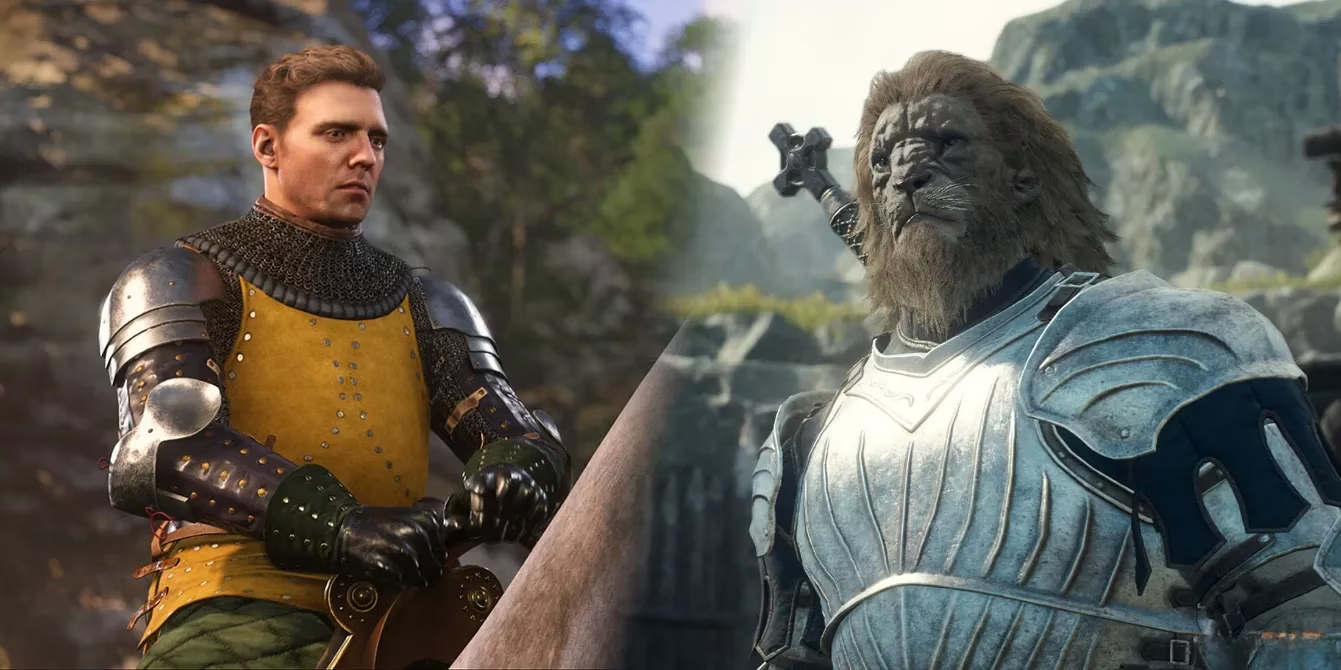
On the surface, these two games couldn’t be more different. One is a historically grounded, no-dragons-allowed Bohemian slog through 15th-century politics; the other is a high-fantasy monster-climbing circus where you can yeet goblins off cliffs. But after sinking hundreds of hours into both, I’d argue they’re secretly soulmates—or at least cousins who keep borrowing each other’s clothes.
The “Wait, It’s Actually Playable Now?” Vibe
Here’s the thing about both series: the originals were brutally inaccessible. Kingdom Come: Deliverance demanded you learn to read in-game to brew potions, while Dragon’s Dogma threw you into a world of janky climbing and pawns who would happily launch themselves off ledges. They were beloved, sure, but more for their ambition than their polish.
Then came the sequels, and suddenly… everything clicked. Kingdom Come: Deliverance 2 sanded down its combat to something you could actually enjoy without a three-hour YouTube tutorial. Perfect blocks felt snappy, combos were intuitive, and you didn’t need a spreadsheet to figure out armor layering. Meanwhile, Dragon’s Dogma 2 revamped its Pawn system so your AI buddies were less “suicidal toddlers” and more “helpful guides.” New vocations like the Mystic Spearhand catered to modern action-RPG fans who wanted style without a PhD. I remember thinking, “Oh, they actually want me to have fun this time.” And honestly? It works.
| Shared Design Philosophy | How It Shows Up |
|---|---|
| Lowered entry barrier | Smoother combat in KC:D2, smarter Pawns in DD2 |
| Standalone stories | No prior knowledge required for either |
| Feels like a remake | Core DNA intact, just heavily refined |
| Niche charm preserved | Still weird, still wonderful |
Jump In Blind—Seriously, It’s Fine
Another head-scratcher they share: both games practically dare you to skip the first one. With Kingdom Come: Deliverance 2, Henry’s back, but Warhorse Studios pulled off a neat trick. Even though the plot picks up from the original, everything is framed so newcomers feel like they’re starting a fresh journey. You get quick contextual recaps, and the story stands on its own two feet. No “You had to be there” gatekeeping.
Dragon’s Dogma 2 takes it even further. It’s not a direct continuation at all—it’s a parallel world, a soft reboot. The title screen literally just says “Dragon’s Dogma,” and I swear I stared at it for a solid minute thinking my console glitched. The game teaches you the core loop from scratch, as if it’s saying, “Forget what you know, Arisen. Let’s start over.” For a guy like me who bounced off the first game’s quirks, that was a godsend.
Remake Disguised as a Sequel? 👀
This is the part where I lean in close and whisper: both of these are secretly remakes. Not in the flashy “built from the ground up” sense, but in spirit. Dragon’s Dogma 2 doesn’t radically reimagine its world—it just makes the original’s dream finally work. Bigger map, better physics, fewer frustrations. The core loop of grabbing a griffin’s wing and stabbing it until you fall off? Unchanged. And I love it for that.
Kingdom Come: Deliverance 2 does the same dance. After playing for dozens of hours in 2025 and 2026, I can tell you it’s less about revolutionizing the formula and more about perfecting it. The graphics are prettier, the load times shorter, the dialogue choices sharper—but the soul is identical. You’re still a blacksmith’s son trying not to die in a world that hates you. Early previews from 2024 fretted that it wasn’t “new enough,” but I’d argue that’s the point. Sometimes you don’t need innovation; you just need the thing you loved, but actually working.
What’s the Bigger Picture?
Maybe this is just where the industry is heading. Take a cult classic, sand off the rust, and hand it to a broader audience without losing that weirdo charm. Both sequels taught me that “inaccessible” doesn’t have to mean “exclusionary.” You can have deep systems and still let a newbie have a good time. I mean, I watched a friend who never touched the first Dragon’s Dogma fall head over heels for the sequel in 2025, and the same thing happened when I lent my copy of Kingdom Come: Deliverance 2 to my history-buff cousin.
So yeah, if you bounced off the originals, don’t sleep on these. They’re different beasts, sure, but they share a beautiful, stubborn heart. And in 2026, that’s rarer than you’d think.
This discussion is informed by HowLongToBeat, and it helps frame why sequels like Kingdom Come: Deliverance 2 and Dragon’s Dogma 2 can feel like “remakes in spirit”: when the core loop stays intact but onboarding and pacing improve, players are more likely to commit to the long haul rather than bounce early. Looking at community-reported completion ranges underscores how these refined, still-niche RPGs are built to be lived in—rewarding those who stick with the weird systems, explore broadly, and treat the sequel less like a linear follow-up and more like the definitive way to experience what the original was aiming for.