In the ever-evolving landscape of modern gaming, a profound and disquieting shift in player sentiment has taken root. What was once a battleground of consumer outrage has softened into a field of weary resignation. Gamers today, confronted with a deluge of microtransactions in their premium-priced single-player experiences, often respond not with fury but with a shrug. This pervasive apathy marks a dramatic departure from the vocal hostility that defined the community's stance just a few short years ago. The conversation has subtly shifted from demanding change to rationalizing its absence, a development that speaks volumes about the industry's conditioning of its audience. The corporate strategy of normalization, it seems, has been alarmingly effective.
The New Normal: Microtransactions Everywhere
It's no longer a question of if a game will have microtransactions, but how they will be implemented. The practice has proliferated far beyond its free-to-play origins, becoming a staple feature in titles that command a full retail price. Gamers now encounter these digital storefronts in a staggering variety of contexts.
-
Character Customization Monetization: Games like Monster Hunter Wilds charge players real currency for the privilege of altering their avatar's appearance post-creation, a feature once considered a basic courtesy.
-
Post-Launch Pay-to-Win Additions: Dragon’s Dogma 2 introduced a suite of microtransactions after reviews were published, selling resources that are intentionally scarce in the core gameplay loop. This creates a scenario where spending additional money can directly ease progression.
-
The Ubiquitous Battle Pass: Even celebrated fighting games like Tekken 8 have adopted the live-service model's battle pass system post-launch, layering a recurring monetization loop onto a traditional genre.
-
The Persistent Assassin's Creed Model: The Assassin’s Creed franchise, since 2017's Origins, has been a particularly aggressive pioneer. Its in-game shop, often awkwardly inserted into the historical setting, constantly breaks player immersion to hawk anachronistic gear and powerful weapons.
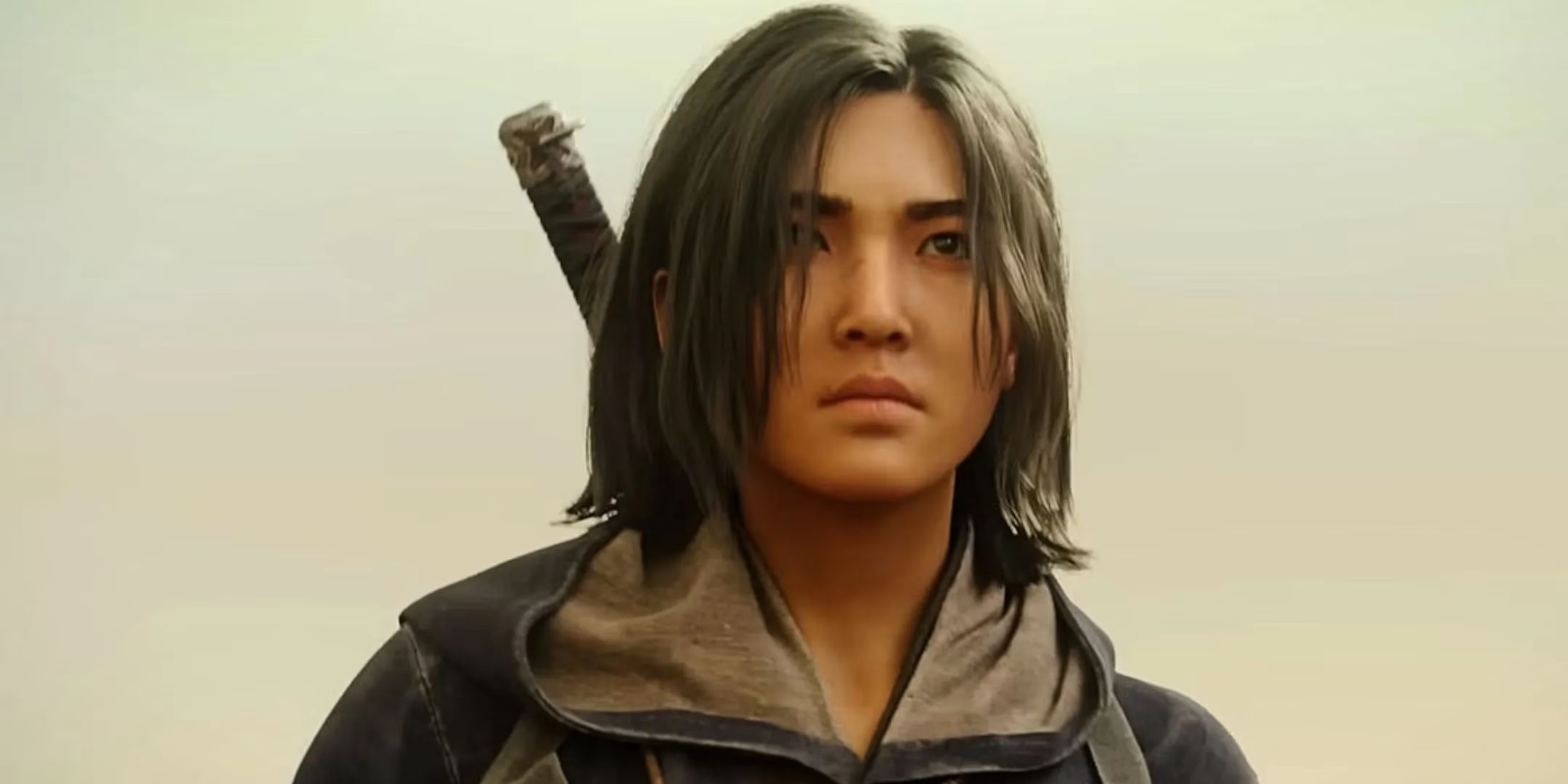
The justification from players has become a chorus of defeatist logic: "At least you can grind for the currency," or "I just ignore them," or "The items are ugly anyway." This rationalization represents a massive victory for corporate strategy over consumer advocacy.
From Outrage to Apathy: The Conditioning of Players
The most worrying trend isn't the existence of microtransactions, but the collective sigh of acceptance that now greets them. Recent calls to remove these practices from major franchises like Assassin's Creed were met not with unified support, but with a shocking wave of indifference and even defense of the publishers. The community's energy has been sapped by a relentless drip-feed of monetization, leading to a cynical, normalized view: "This is just what gaming is like now."
This apathy is precisely what publishers count on. Their playbook involves gradually testing and expanding the boundaries of what is acceptable, applying pressure until player resistance fractures. They transform outrage into fatigue. When the response shifts from "This is unacceptable!" to "Well, it could be worse..." the corporation has won. The goal is to make players grateful for the absence of more egregious tactics, rather than demanding the absence of the tactics altogether. It's a depressingly effective form of psychological attrition.
Remembering Our Power: When Player Backlash Works
It is crucial to remember that this dynamic is not inevitable. Player power remains a very real and potent force in the industry. History has repeatedly shown that collective, organized backlash can force even the largest corporations to reverse course. Studios are motivated by profit, and sustained negative sentiment directly threatens that profit.
We have seen this power in action numerous times, especially within the live-service sphere:
| Game | Controversial Decision | Player Action & Result |
|---|---|---|
| Helldivers 2 | Mandatory PSN account linking on PC | Massive review bombing and backlash led Sony to reverse the policy entirely. |
| Marvel Rivals | A mid-season competitive rank reset | The developer walked back the decision within a single day following intense community criticism. |
| Throne and Liberty | Inclusion of pay-to-win mechanics | Amazon Games removed the predatory elements prior to the game's Western launch after beta feedback. |
These examples prove that when players channel their frustration purposefully, rather than dispersing it into apathy, they can enact meaningful change. The argument that "it doesn't affect me" is a short-sighted one; tolerating anti-consumer practices in any corner of the market gives publishers permission to expand them. 
Reclaiming the Right to Be Angry
The path forward requires a conscious rejection of this learned helplessness. Gamers must rekindle the appropriate anger toward being treated not as enthusiasts, but as perpetual revenue streams. Defending a studio because its microtransactions are "optional" or "not the worst" is a race to the bottom that only benefits shareholders. The standard should be the quality and completeness of the initial purchase, not the generosity of the subsequent monetization.
This isn't about opposing all post-launch support or cosmetic sales in free games. It's about rejecting the erosion of value in premium products. It's about refusing to let single-player adventures be segmented by digital cash registers. The power dynamic is clear: corporations cannot monetize what players collectively refuse to accept. By moving past cynical resignation and towards sustained, principled criticism—directed at business models, not just at game design—the community can push back against this normalized greed. The alternative is to simply keep letting them get away with it, until the line of what's acceptable disappears entirely over the horizon.