In the year 2026, the re-release of a legendary title has sent shockwaves through the gaming community, but not for the reasons one might expect. While the shimmering graphical overhaul of Oblivion Remastered captures the eye, it is the humble, often-mocked character creator that is secretly whispering the future. This foundational, initial screen—a portal to the world of Tamriel—has become an unintentional prophecy, a looking glass into the monumental challenges and revolutionary potential awaiting The Elder Scrolls 6. Bethesda stands at a crossroads, caught between the cherished, janky soul of its past and the dazzling, player-driven expectations of the modern RPG era. The fate of the next Dragonborn may very well be sculpted in the awkward sliders of a remaster.
The Legacy of Awkward Charm: A Foundation to Build Upon
The character creation suite in Oblivion Remastered remains, at its heart, a delightful relic. It is a system that fans have come to adore for its very imperfections—the potato-faced NPCs, the bizarre body proportions, the hairstyles that defy both gravity and logic. This is the series' legacy in pixelated form: a balance of staggering player freedom and legacy quirks that have defined its identity. The remaster subtly polishes these mechanics, offering body type selections over traditional gender labels—a nod to inclusivity—but it stops frustratingly short of contemporary standards. It's like finding a beloved, cobweb-covered spellbook; the magic is undeniable, but the pages are desperately in need of an update.
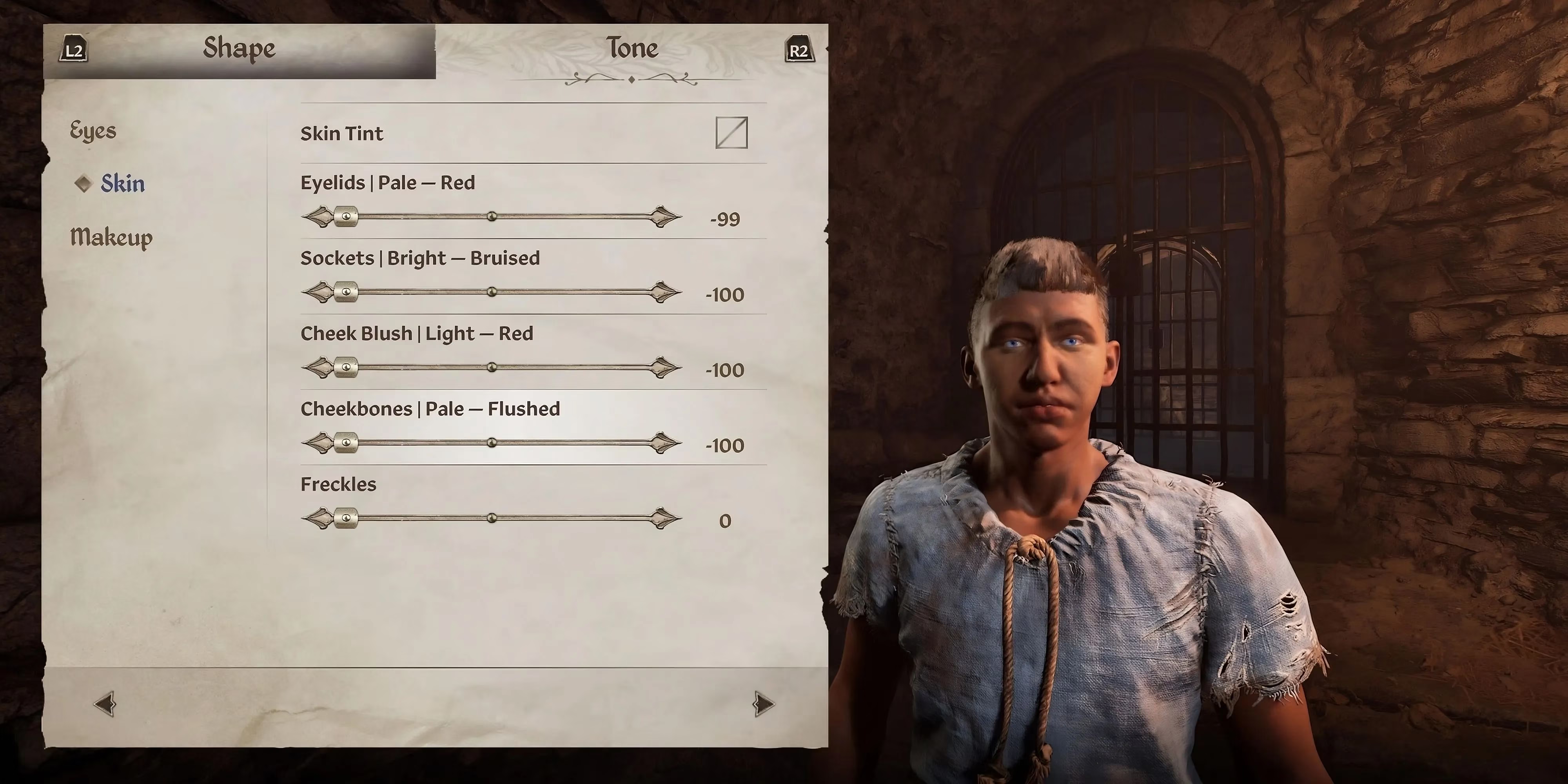
Where Oblivion revels in its charming clumsiness, other titans of the genre have sprinted ahead. Consider the meticulous craftsmanship of Dragon Age: The Veilguard. Its creator isn't just a tool; it's a biological sculptor's studio. Players wield god-like control over subcutaneous fat distribution, skeletal structure, and even the dynamic physics of hair and clothing. Every strand of hair in The Veilguard reacts to wind, rain, and the simple act of running—a far cry from the helmet-like wigs of Cyrodiil. This level of responsiveness doesn't just create a pretty face; it forges a living, breathing entity that feels intrinsically part of its world. For The Elder Scrolls 6 to not just compete but dominate, it must absorb this lesson: immersion begins in the mirror.
The Blueprint of Beautiful Chaos: Learning from Extremes
The path forward for Bethesda is not found in a single direction, but in synthesizing two seemingly opposite philosophies:
-
The Polished Vision of The Veilguard: A system dedicated to cinematic authenticity and grounded detail. Imagine crafting a Nord whose scars tell a story, whose eyes reflect the pale light of Skyrim's moons, and whose braids whip violently in the coastal storms of Hammerfell.
-
The Unhinged Freedom of Dragon's Dogma 2: A manifesto for creative anarchy. Capcom's masterpiece understands that heroes come in all forms—from diminutive, gnome-like spellcasters to hulking, mountain-sized warriors. Its tools encourage viral, player-driven absurdity, a feature that has kept the game thriving in the social media zeitgeist.
This duality is the key. The Elder Scrolls 6 doesn't need to eliminate the "ugly charm" that birthed a thousand memes from Skyrim; it needs to empower players to choose their level of chaos. The system must be deep enough to craft a face worthy of a royal portrait, but flexible enough to create a creature so gloriously unsettling it could haunt the depths of Blackreach. This isn't just about sliders; it's about providing a toolkit for identity, whether that identity is noble, monstrous, or hilariously somewhere in between.
Beyond Creation: The Need for an Evolving Identity
Skyrim's shadow is colossal, a titan whose success transcended gaming itself. To step out from that shadow, The Elder Scrolls 6 must reimagine everything, starting at the very beginning. Character creation is the inaugural handshake with a world destined to consume hundreds of hours. If that handshake feels weak or outdated, the entire epic relationship is jeopardized from the first moment.
Therefore, Bethesda must think beyond mere creation. The studio needs to architect a character identity system that matures alongside the player. This means integrating features that are now considered essential:
| Legacy Limitation (Oblivion/Skyrim) | Modern Necessity (The Elder Scrolls 6) |
|---|---|
| Static, unchangeable post-creation decisions | In-game, lore-friendly ways to revise race, birthsign, or class. |
| Appearance altered only via console commands | Accessible barbers, sculptors, or even magical rituals for physical change. |
| A character's look divorced from world reactivity | Wear, tear, scars from significant battles; weathering from climate. |
| A creation menu that is the end of the story | A creation menu that is just the first chapter of a visual biography. |
Imagine earning a distinctive facial scar from a dragon's claw that the game remembers. Envision your character's skin tanning under the Alik'r desert sun or growing pale from years in Morrowind's ashlands. These are the evolutions that make an avatar feel truly owned. Oblivion Remastered allows cosmetic tweaks through behind-the-scenes commands, but the future demands this flexibility be woven into the very fabric of the world.
The Final Prophecy: Crafting the Next Legend
The message embedded within Oblivion Remastered is clear and urgent. The gaming landscape of 2026 is one of unparalleled player agency and narrative ownership. Players are no longer content to simply visit a world; they demand to inhabit it, to see their unique mark upon it from their character's visage to their impact on the history books. A shallow creator would be a catastrophic misstep for a franchise of this magnitude.
The Elder Scrolls 6 requires a system that is simultaneously a loving homage to the series' wonderfully weird roots and a bold leap into a new era of customization. It must grant the tools for both breathtaking beauty and glorious absurdity. It must understand that a player's identity is not set in stone at hour one, but is a story that unfolds over hundreds of hours of adventure, triumph, and failure. The awkward, beloved face of Oblivion was just the beginning. The next Dragonborn awaits a canvas worthy of a legend. The pressure is monumental, but so is the potential to once again redefine what it means to be the hero in a fantasy world. 🏔️⚔️✨