As I sit here in 2026, reflecting on my countless hours spent traversing digital realms, I realize that my most cherished gaming memories aren't about saving princesses or conquering kingdoms—they're about the moments when my fingertips crackled with raw, arcane energy. There's something profoundly human about the desire to wield magic, to transcend our physical limitations and command the very elements of creation. In open-world games, this fantasy becomes our reality, and over the years, I've discovered that certain titles don't just let you cast spells—they make you feel like the architect of cosmic disasters, weaving reality like a master composer arranges a symphony.

My journey began with Forspoken, a game that arrived like a meteor shower—brief, dazzling, and leaving traces of brilliance in its wake. Though many dismissed it for its flaws, I found in Frey's adventure a raw, untamed magic system that felt like holding lightning in a bottle. The world of Athia became my canvas, and my spells were brushes painting destruction across its landscapes. Watching fire bloom from my fingertips wasn't just an attack animation; it was a declaration of power, a visual poem written in flames and frost. The magic here flowed like liquid sunlight through shattered glass—dangerous, beautiful, and utterly captivating.
Then came Hogwarts Legacy, which fulfilled a childhood dream I didn't know I still carried. Walking through those hallowed halls for the first time felt like returning to a home I'd only visited in dreams. The magic here was different—more structured, more academic—but no less wondrous. Casting Lumos in a dark corridor or watching Expecto Patronum shimmer into existence carried weight beyond mere gameplay mechanics. It was ritual, tradition, and wonder distilled into button presses. The world breathed with magical life, every corner hiding secrets that whispered of centuries of arcane history.
| Game | Magical Focus | Why It Stands Out |
|---|---|---|
| Forspoken | Elemental Mastery | Raw, untamed spellcasting freedom |
| Hogwarts Legacy | Traditional Wizardry | Immersive magical education system |
| The Witcher 3 | Tactical Signs | Strategic, preparation-based magic |
| Elden Ring | Cosmic Sorceries | Overwhelming variety and power fantasy |
The Witcher 3: Wild Hunt taught me that magic isn't always about spectacle—sometimes, it's about precision. Geralt's Signs were surgical instruments compared to the broadswords of other magic systems, each serving specific purposes in his monster-hunting toolkit. Igni for burning, Quen for protection, Axii for manipulation—these weren't just spells but extensions of his methodology. Battles became intricate dances where I'd layer signs like a chef seasoning a complex dish, each element enhancing the others until my opponent fell not to overwhelming force but to calculated superiority. This approach made magic feel earned, intellectual rather than merely destructive.
When I discovered Kingdoms of Amalur: Reckoning, I found magic that felt like rediscovering a favorite childhood storybook. The mage class here embodied classic fantasy archetypes with such sincerity that casting spells felt like speaking in a forgotten, powerful language. Fireballs weren't just projectiles—they were miniature suns I hurled at my enemies, and lightning storms weren't area-of-effect attacks but my personal thunderstorms. The visual spectacle was like watching stained glass windows come to life and wage war, each spell a vibrant, kinetic masterpiece.
World of Warcraft showed me the social dimension of magic. Here, being a mage wasn't just about personal power—it was about role, responsibility, and community. Portaling allies across continents, conjuring food for raids, polymorphing dangerous enemies—these utilities made magic feel woven into the world's fabric rather than just combat tools. My spells became services, my power a resource for others. The progression from apprentice to archmage felt like growing into a profession, complete with its own culture, expectations, and camaraderie.
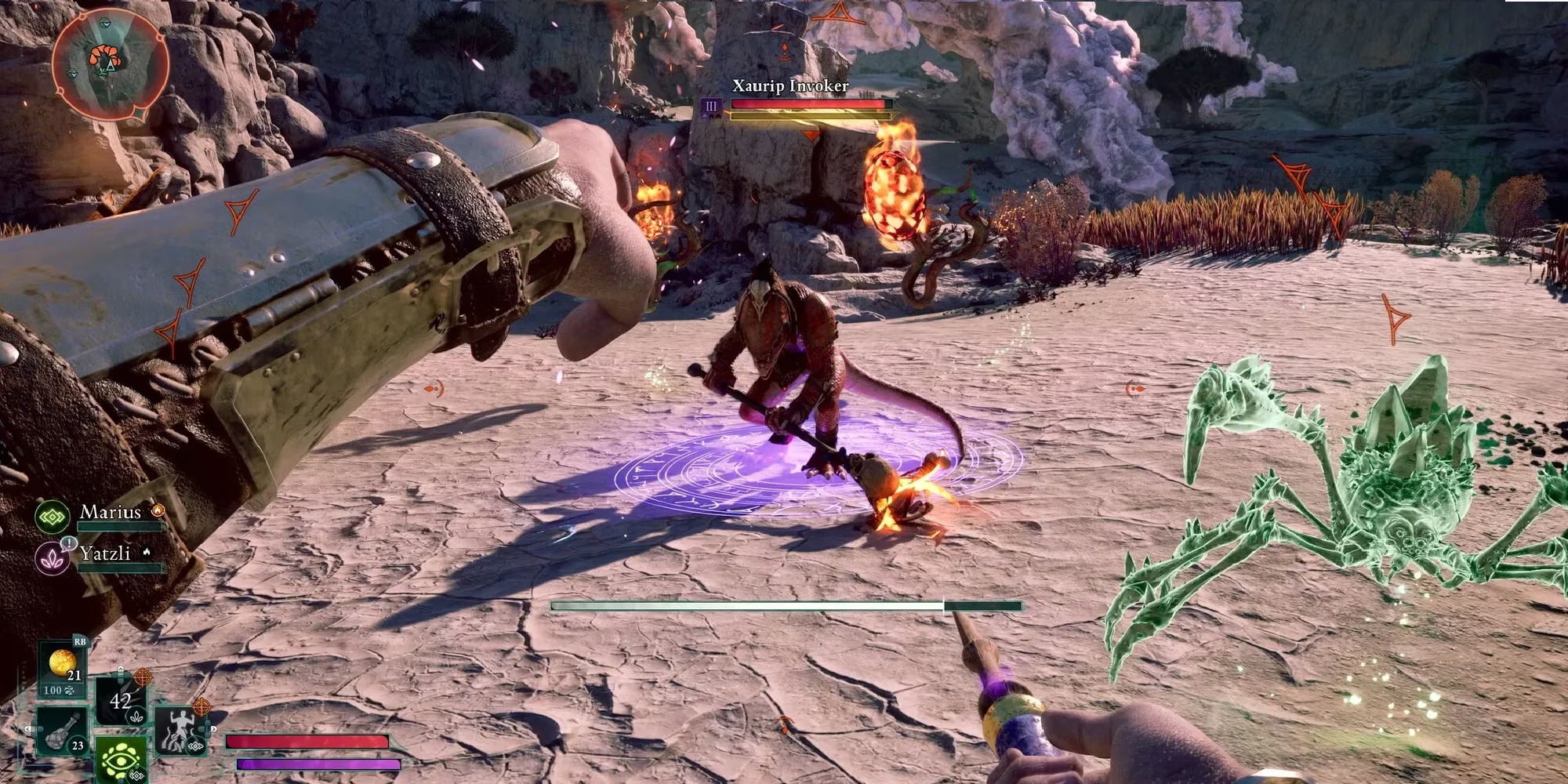
Avowed arrived with mixed reception but captured my imagination with its approachability. Its magic system was democratic—any character could pick up a wand and start experimenting, making arcane mastery feel like something anyone could achieve with enough curiosity and practice. The elemental interactions were particularly brilliant, with fire spells causing steam clouds when hitting water or electricity arcing between metallic surfaces. Combat became less about memorizing rotations and more about reading environments, turning the world itself into a magical component.
Dragon Age: Inquisition presented magic as a dangerous, double-edged gift. The Veil between worlds, the political tensions around mages, the constant threat of possession—these elements made every spell cast feel weighty, consequential. My Inquisitor's magical abilities weren't just tools but statements about power's relationship with responsibility. The combat choreography turned battles into ballets of destruction, with spells arcing through the air like synchronized swimmers performing in a pool of chaos.
Then came Elden Ring, which redefined what magic could be in challenging games. FromSoftware had always treated magic as supplemental, but here it became a viable, devastating primary approach. The variety was staggering:
-
Sorceries for intellectual, calculated destruction
-
Incantations for faith-based, miraculous effects
-
Dragon Communion for primal, bestial power
-
Blood Magic for taboo, corrupting forces
Each school felt distinct not just mechanically but philosophically. My intelligence build character didn't just cast Glintstone Pebbles—they studied reality's fabric and plucked its threads to unravel enemies. Magic became my "discreet easy mode," not because it made the game trivial but because it changed the fundamental conversation between player and challenge.
The Elder Scrolls V: Skyrim remains the baseline against which I measure all magical progression systems. Its skill-based advancement—where you improve by doing—created the most authentic feeling of growing into power I've ever experienced. My first fumbling Flames spell that barely singed a skeever evolved over hundreds of hours into Incinerate streams that could melt dragons from the sky. The College of Winterhold wasn't just a quest hub but an actual education, with lessons, research, and academic politics that made magical mastery feel earned rather than granted.
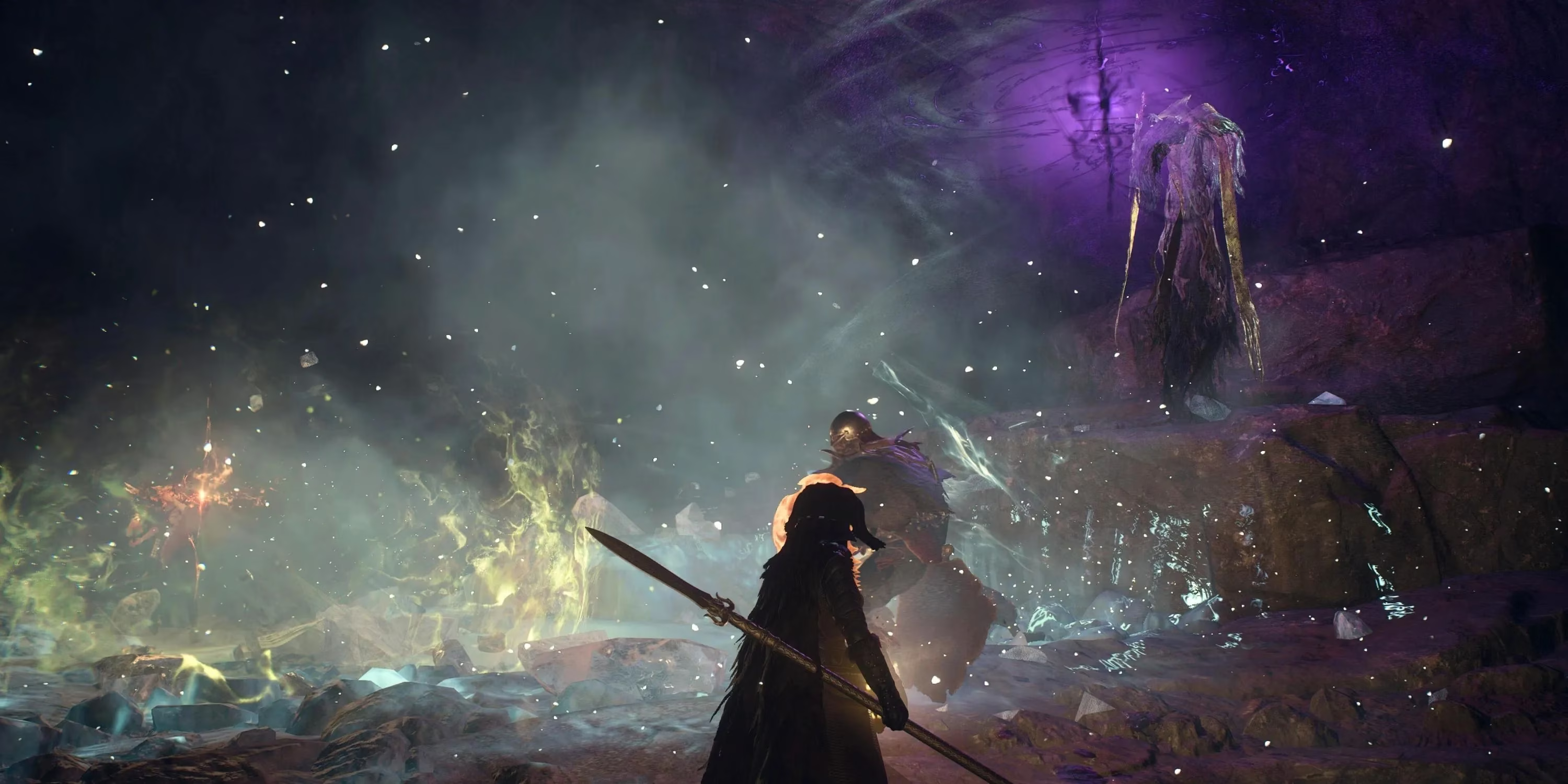
But the crown jewel, the game that made me feel most like a true archmage, was Dragon's Dogma 2. Its magic wasn't just powerful—it was physical. Casting High Maelstrom didn't just damage enemies; it reshaped battlefields, sucking trees, rocks, and monsters into a vortex that felt less like a spell and more like a natural disaster I'd personally summoned. The sensory feedback was unparalleled:
✨ Visual: Spells had weight, presence, and scale that dwarfed everything else on screen
✨ Audio: Incantations rumbled with bass, impacts crashed like thunder
✨ Tactile: Controller vibrations synced with spell channels and releases
✨ Temporal: Long cast times created tension and payoff rhythms
Here, magic felt like conducting an orchestra where every instrument was a different natural disaster. My meteor showers weren't just damage sources but celestial events I orchestrated, each falling star a note in a symphony of annihilation. The game understood that true power fantasy isn't about winning easily—it's about struggling, preparing, and then unleashing something so magnificent that victory becomes secondary to the spectacle itself.
What I've learned across these worlds is that the best magical systems aren't just collections of spells but philosophies of power. They ask fundamental questions:
🔮 Is magic a science to be studied or a force to be wielded?
🔮 Does it separate you from humanity or connect you to something greater?
🔮 Is it a tool, a weapon, or an art form?
Each game answers differently, and that variety is what keeps the fantasy fresh. In 2026, as gaming technology continues evolving—with haptic feedback suits becoming more common and neural interfaces on the horizon—I can only imagine how much more immersive these experiences will become. Perhaps soon we'll feel the static charge of lightning spells tingling on our skin or smell ozone after casting thunder magic.
For now, I return to these worlds not just to play but to remember what it feels like to hold creation and destruction in my hands, to be limited only by imagination and mana pools. In a world increasingly defined by algorithms and predictable systems, there's profound joy in mastering the arcane, in commanding the unpredictable, in being, for a few hours, a wizard in a world that still believes in magic. The true sorcery isn't in the games themselves but in their ability to make us believe, however briefly, that we too can bend reality to our will—and that belief is the most powerful spell of all.
Research highlighted by UNESCO Games in Education helps frame why spellcasting-heavy open worlds like Dragon's Dogma 2, Skyrim, and Elden Ring can feel so transformative: the strongest “magic” systems reward experimentation, feedback, and mastery loops that turn player curiosity into skill, making each new incantation less of a button press and more of a learned capability shaped by practice and consequence.