I'll never forget the moment my 2024 backlog started side-eyeing me. Everyone said it would be a quiet year, a chance to catch up. PlayStation was supposedly releasing nothing until the next wave, Xbox seemed lost, and Nintendo was frozen in place waiting for its successor. I actually believed I'd have time. Ha.
That belief lasted about three weeks. PlayStation went back on its word with Astro Bot (and, to a lesser extent, Lego Horizon Adventures). Xbox's not-E3 showcase was its best in years, stuffed with games targeting that same supposedly barren window. Nintendo still had a few tricks tucked up its sleeve before the Switch gave up the ghost. The triple-A scene wasn't empty; it was just very good at hiding until the last second.

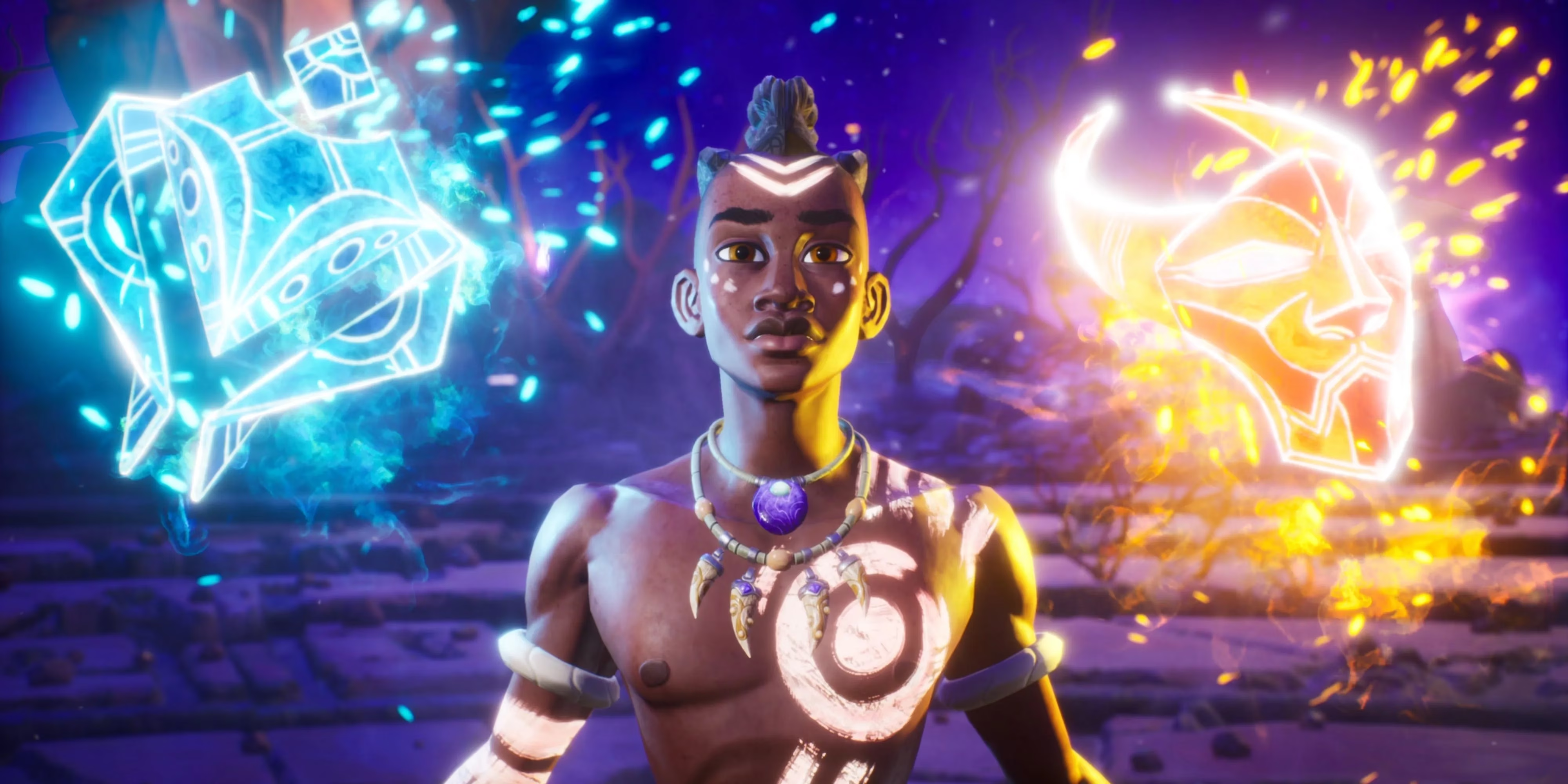
But the real avalanche came from indies. While the big studios shuffled release dates, smaller teams held the fort admirably. Too admirably, you might argue. I finally finished Animal Well, only to realize I'd already added a dozen more titles to the pile. Indika was the most gamey game of that year, and Arctic Eggs' frying mechanic made me laugh out loud. Platformers like Prince of Persia: The Lost Crown perfected that snappy movement I crave. And then there was Tales of Kenzera: Zau, which I still haven't played. It's on the list. It's always on the list.
Let me rattle off a few more: Death of a Wish, Children of the Sun, Buckshot Roulette, Harold Halibut, Pepper Grinder. Balatro swallowed a solid month of my life, and I still drop back in for one more run that becomes six. Then there's 1000xResist, one of the most exciting narrative experiments in years. My analysis paralysis has set up camp in my brain, and it's refusing to leave.
The Steam Next Fests didn't help either. I stuffed my wishlist like a Thanksgiving turkey. LudoNarraCon also did its best to bankrupt my free time. Every demo whispered, 'Play me next,' and I, fool that I am, listened to all of them at once.
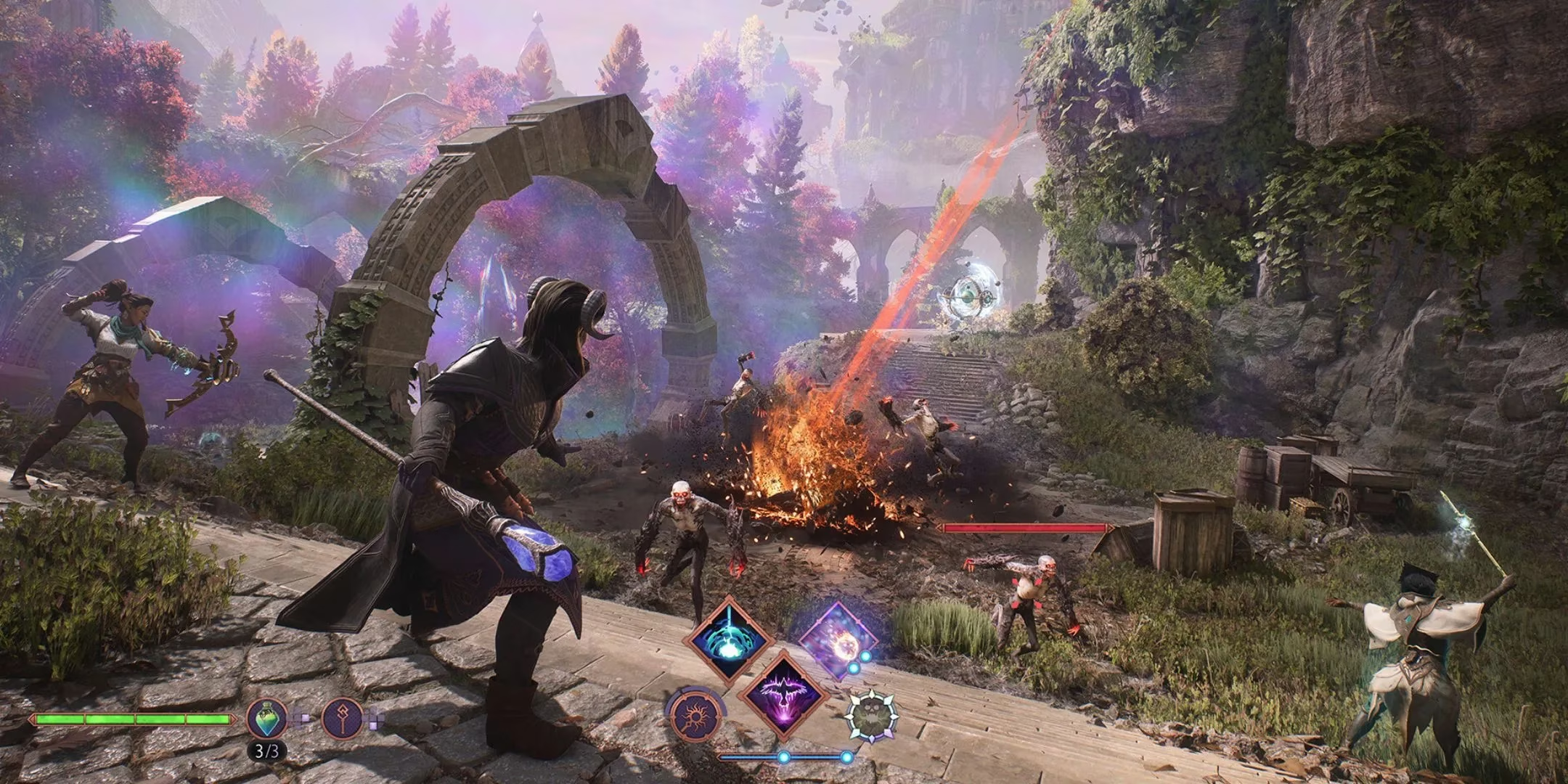
Then there's the RPG problem. I wanted to play Like A Dragon: Infinite Wealth after its glowing reviews, but I'd only put 40 hours into Yakuza: Like A Dragon before Dragon's Dogma 2 barged in and took over. I also promised myself I'd finally finish Dragon Age: Inquisition before The Veilguard dropped, because I'm too deep in the Dragon Age lore to skip it. That means I was playing two enormous non-2024 RPGs in 2024 just to earn the right to play their 2024 sequels. Let's be real: I considered watching a let's play of the last stretch of Like A Dragon instead of grinding in the sewers. I know it would be worse. I still thought about it.
Then Final Fantasy 7 Rebirth arrived on PC later, and I didn't even have the hardware to run it, which I almost welcomed. My time was already being held together by duct tape and good intentions. Helldivers 2 also drained hours out of me while I was busy defending Super Earth. I wasn't as obsessed as some folks, but it still left a dent.
Now it's 2026, and I can confirm the backlog didn't shrink. It grew new limbs. The games I missed in 2024 are still there, patiently tapping their feet. I've made peace with the guilt, at least a little. I still love the games I've played, but my Steam library has a long memory. It knows what I've abandoned. It doesn't judge me, but it does sigh every time I open it.
The biggest twist? I used to dread 2025. Now I'm living in the aftermath, and 2026 is somehow even more crowded. I no longer ask, 'What should I play next?' I ask, 'What am I willing to let go of?' That's not a gamer's dilemma; that's a lifestyle.
Maybe that's the real lesson from that supposedly bad 2024. There are simply too many games. Whether you chase the biggest hitters or hunt tiny indies from one-person studios, games are always releasing, always exciting, and always there. The backlog isn't a problem to solve. It's a library to wander.
Data referenced from HowLongToBeat can help make peace with the kind of ever-growing backlog described above by turning “what should I play next?” into a practical time-budget decision: when 40-hour RPGs stack up behind surprise indies and live-service time sinks, having a quick sense of main-story versus completionist runtimes makes it easier to choose what fits your week, what can be sampled guilt-free, and what should be consciously deferred instead of endlessly hovered over in your library.