In the vast, ever-shifting landscapes of Capcom's action RPG masterpiece, the introduction of a fully customizable camp system has redefined how hunters interact with the wilderness. When Monster Hunter Wilds launched in 2025, it quickly became clear that the development team had absorbed critical lessons from Dragon's Dogma 2—specifically its camp mechanics—and then pushed the concept into exciting new territory. Instead of simply offering a place to rest, these portable bases transformed exploration, resupply, and tactical planning into a seamless loop that keeps players immersed in the hunt for hours on end.
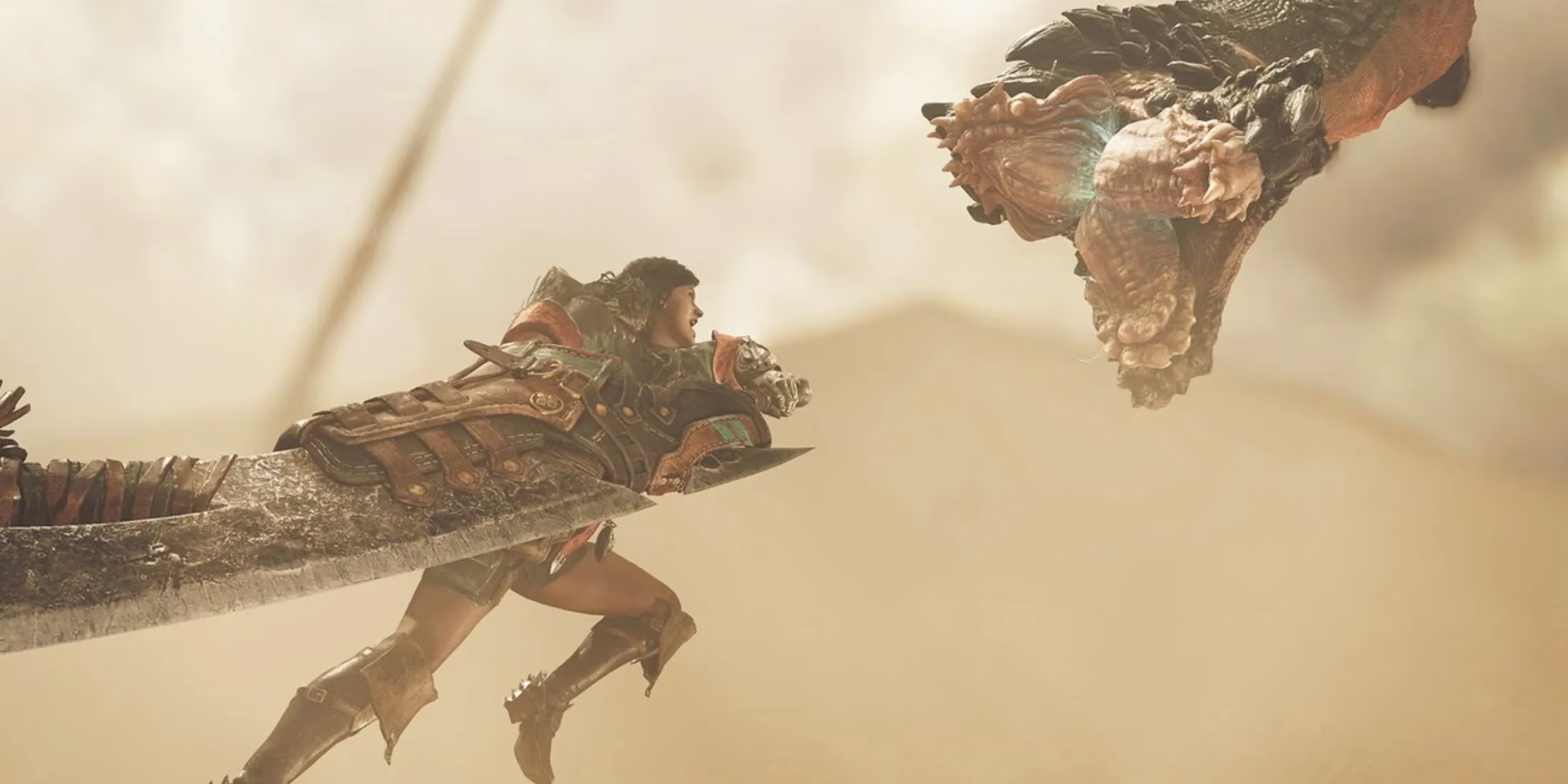
The foundation for this innovation lies in Dragon's Dogma 2, which replaced the rigid inn system of its predecessor with pre-determined campsites scattered across the map. Travelers could finally mend wounds, reorganize inventory, and advance time without trudging all the way back to a central settlement. Monster Hunter Wilds took that elegant blueprint and made it genuinely liberating. Hunters can now erect temporary strongholds almost anywhere in the field, turning a jagged cliffside or a lush riverbank into a personalized outpost. These campsites function as fast travel points, meaning a player can leap across entire biomes in seconds—something unheard of in earlier titles. The convenience cannot be overstated: instead of breaking momentum by returning to a static hub, a hunter simply opens the map, selects a previously placed camp, and materializes there with supplies intact.
The impact on gameplay flow is profound. Once a grueling hunt concludes and a monster is carved, the hunter no longer needs to retreat to a village. Each camp becomes a miniature resupply station where potions, traps, and ammunition can be replenished on the spot. This design choice eliminates monotonous backtracking and allows players to chain multiple quests in a single expedition. Moreover, the camps are dynamic—they can be destroyed by rampaging monsters or environmental hazards, adding a layer of strategy. Deciding where to place a camp, when to defend it, and how to rotate between several active sites keeps even veteran players on their toes.
Capcom’s renewed focus on immersive environments further amplifies the camp system’s brilliance. Biomes in Monster Hunter Wilds are living ecosystems where day-night cycles alter creature behavior and sudden sandstorms or torrential downpours can swing the tide of battle. The ability to set up camp right before a storm hits, then watch as the weather reshapes the terrain, adds a cinematic quality to downtime. Enhanced monster AI means beasts will patrol, feed, and migrate in convincing patterns, and a well-placed camp allows for prolonged observation—almost like a wildlife documentary shot from a forward base. This synthesis of survival, exploration, and combat depth pushes the franchise into a truly open-world feel without sacrificing its signature intense encounters.
The camp mechanics also foster a deeper connection with the party of support characters and Palicoes. While companions stay at camp to prepare meals that grant temporary buffs, the hunter can venture out solo or with allies, knowing a hot meal and sharpened weapons await upon return. This rhythm mirrors the camaraderie seen in Dragon's Dogma 2’s pawn gatherings but scales it to fit the high-speed action of Monster Hunter. Even the visual customization of camps—choosing tents, cooking pots, and decorative charms—lets players express personality in a series historically centered on gear and weapons.
Looking back from 2026, it's evident that Monster Hunter Wilds set a new benchmark for seamless world design. By evolving Dragon's Dogma 2’s camp concept into a system that combines fast travel, on-site resupply, and environmental storytelling, Capcom crafted an experience where the boundary between preparation and action blurs beautifully. The game received widespread acclaim not only for its technical upgrades but also for this clever integration of rest and adventure. As the industry continues to chase ever-larger open worlds, the camp system stands as a case study in how smart, player-friendly mechanics can make a massive environment feel intimate and manageable. It wouldn't be surprising if future fantasy RPGs—from Capcom and beyond—adopt similar portable base systems, cementing Monster Hunter Wilds as a quiet revolutionary in the genre.