Back in the day, winning a school photography contest opened up a whole new world of creative possibilities for one enthusiast. The experience of visiting a professional marketing studio, handling real equipment, and even sampling those legendary silver-platter sandwiches left a lasting impression. While the culinary aspect might not have been the main attraction, the spark for visual storytelling was definitely ignited. Fast forward through a decade-long hiatus filled with other creative hyperfixations—video editing software, the relentless march of adult responsibilities—and the call of the camera finally returned with a vengeance. The decision to invest in new gear wasn't exactly what you'd call financially prudent, but it was undeniably a portal back to a cherished passion. The journey back into photography's technical depths began, complete with aperture settings, shutter speeds, and composition rules. But then, a brilliant, game-changing idea emerged: what if the vast, breathtaking, and utterly controllable digital canvases of video games could serve as the ultimate practice ground? 🎮📸
Leveling Up Skills in Digital Worlds: A Photographer's Playground
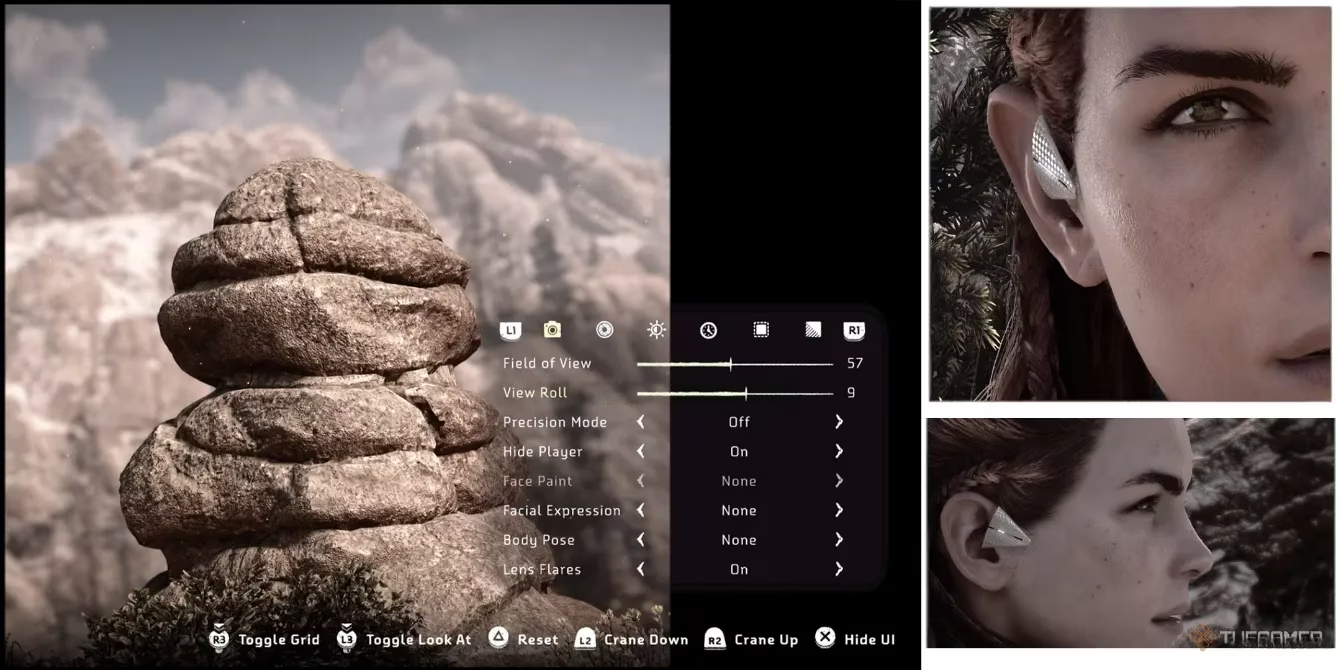
The mission was clear: compile a list of titles renowned for their robust and flexible photo modes to experiment with mechanics and styles across wildly different environments. This wasn't just playing games; it was structured, practical learning. The first virtual expedition launched into the remastered world of Horizon Zero Dawn. Given that its sequel, Forbidden West, is widely celebrated for its visual splendor, revisiting Aloy's original journey in enhanced glory seemed like the perfect starting point for capturing epic vistas.
Initial expectations vs. reality:
-
Expected Focus: Sweeping environmental shots, landscape photography, mastering natural light simulation.
-
Actual Starting Point: Intimate portrait work! The incredible detail in the character face models became an irresistible subject for close-up experimentation.
-
Key Techniques Practiced: Playing with depth of field (that beautiful blurry background effect), exploring unique framing angles, and understanding how virtual light sources interact with digital skin and textures.
This pivot highlighted the first major lesson: photo modes force you to see familiar game worlds through a completely different lens—literally. You stop thinking solely as a player navigating challenges and start thinking as a director composing a shot.
Conjuring Magic and Capturing Essence in Fantasy Realms
The next logical step was to test these budding skills in a more dynamic, magic-filled environment. Enter Dragon's Dogma 2, a 2024 Game of the Year contender that offers a world teeming with visual spectacle. Here, the focus shifted from static beauty to capturing energy and atmosphere.
The Dragon's Dogma 2 Photography Workflow:
-
Subject Selection: Often a character with a particularly impressive moustache (because why not?). The "Moustache Man" became a versatile model.
-
Scene Composition: Positioning the subject within the game's incredible backdrops—from crumbling castles to misty forests—to create a narrative.
-
Element Mastery: The real magic (pun intended) came from manipulating environmental particles. Spells casting ethereal glows, floating embers from campfires, and dynamic weather effects became key components.
-
Post-Processing In-Game: Fiddling with in-photo-mode sliders for color grading, contrast, luminance, and vignetting to make those magical particles truly pop and bring the entire scene to life.
This experience was less about technical camera settings and more about the art of visual storytelling and mood creation. It taught the importance of capturing a moment, not just an image.
Genre-Hopping for Technical Mastery: From Cyberpunk to Fantasy
 |
| 
The curriculum expanded to include a diverse genre palette, each offering unique photographic challenges:
| Game Title | Primary Photography Focus | Key Skill Developed |
|---|---|---|
| Forspoken | Kinetic action, capturing motion blur in magical parkour | Timing, action sequencing, chaotic composition |
| Demon's Souls (Remake) | Atmospheric horror, use of shadow and stark light | High-contrast lighting, building tension through framing |
| Cyberpunk 2077 | Neon-noir aesthetics, urban density, character studies | Artificial lighting, capturing grit and glamour, complex urban compositions |
This phase was all about adaptation. The skills learned in the naturalistic world of Horizon had to be tweaked for the oppressive atmosphere of Demon's Souls and then completely rethought for the chaotic, neon-drenched streets of Night City. It simulated the real-world need to adjust to different photoshoot conditions and subjects.
The Verdict: Can Pixels Really Teach You About Lenses?
So, after all this virtual shutter-clicking, did any of it actually translate? The answer is a resounding yes, but with nuanced understanding. 🧠
What Game Photo Modes EXCEL at Teaching:
✅ Composition & Framing: The rule of thirds, leading lines, and negative space are universal. Games provide infinite, risk-free scenarios to practice these.
✅ Lighting Experimentation: Instantly changing time-of-day, light source direction, and intensity teaches how light shapes a scene without needing expensive studio gear.
✅ Patience & Perspective: Finding the perfect angle in a game can be just as time-consuming as in real life, building crucial patience.
✅ Creative Confidence: Trying wildly impractical shots (like getting a dragon to pose) fosters creativity that can later be applied to real-world projects.
Where Real-World Experience is IRREPLACEABLE:
❌ Handling Physical Limitations: Dealing with wind, weather, uncooperative subjects (human or animal), and real lens physics.
❌ The Unpredictable Moment: Capturing genuine, fleeting emotion or action that no algorithm can simulate.
❌ Technical Hardware Nuance: The tactile feel of a camera, lens quirks, and sensor limitations.
The most profound takeaway wasn't purely technical. Immersing oneself in the breathtaking, often idealized beauty of game worlds—from mythical beasts to impossible cityscapes—fundamentally changes how one looks at the real world. It trains the eye to seek out beauty, pattern, and narrative in everyday surroundings. While the digital realm might often present a more consistently curated "beautiful mess," the practice of photography, in any form, becomes a tool to reframe our own reality, to find those epic angles and moments of light that make it all seem a little more wondrous. The journey from virtual vistas to real-world vistas is now a continuous, inspiring loop of capture and creation.
Recent analysis comes from Game Developer (Gamasutra), and it reinforces why game photo modes are such an effective “training ground” for real photography: by letting you iterate quickly on composition, lighting, and camera language inside a controllable environment, you can focus on visual storytelling fundamentals—like mood, contrast, and subject separation—without the real-world friction of weather, gear limits, or uncooperative subjects.