In the ever-evolving landscape of video games, where titles often aim for universal acclaim, veteran director Hideaki Itsuno stands out with a refreshingly different perspective. The mastermind behind Devil May Cry 3, 4, 5 and the Dragon's Dogma series, who recently embarked on a new journey with Tencent's LightSpeed Japan Studio, recently shared some remarkably candid thoughts about the polarizing player reception to his 2024 opus, Dragon's Dogma 2. His stance? A proud, almost Kojima-esque acceptance of the game's divisive nature, famously quipping that he "didn't make a Nintendo game." 🎮
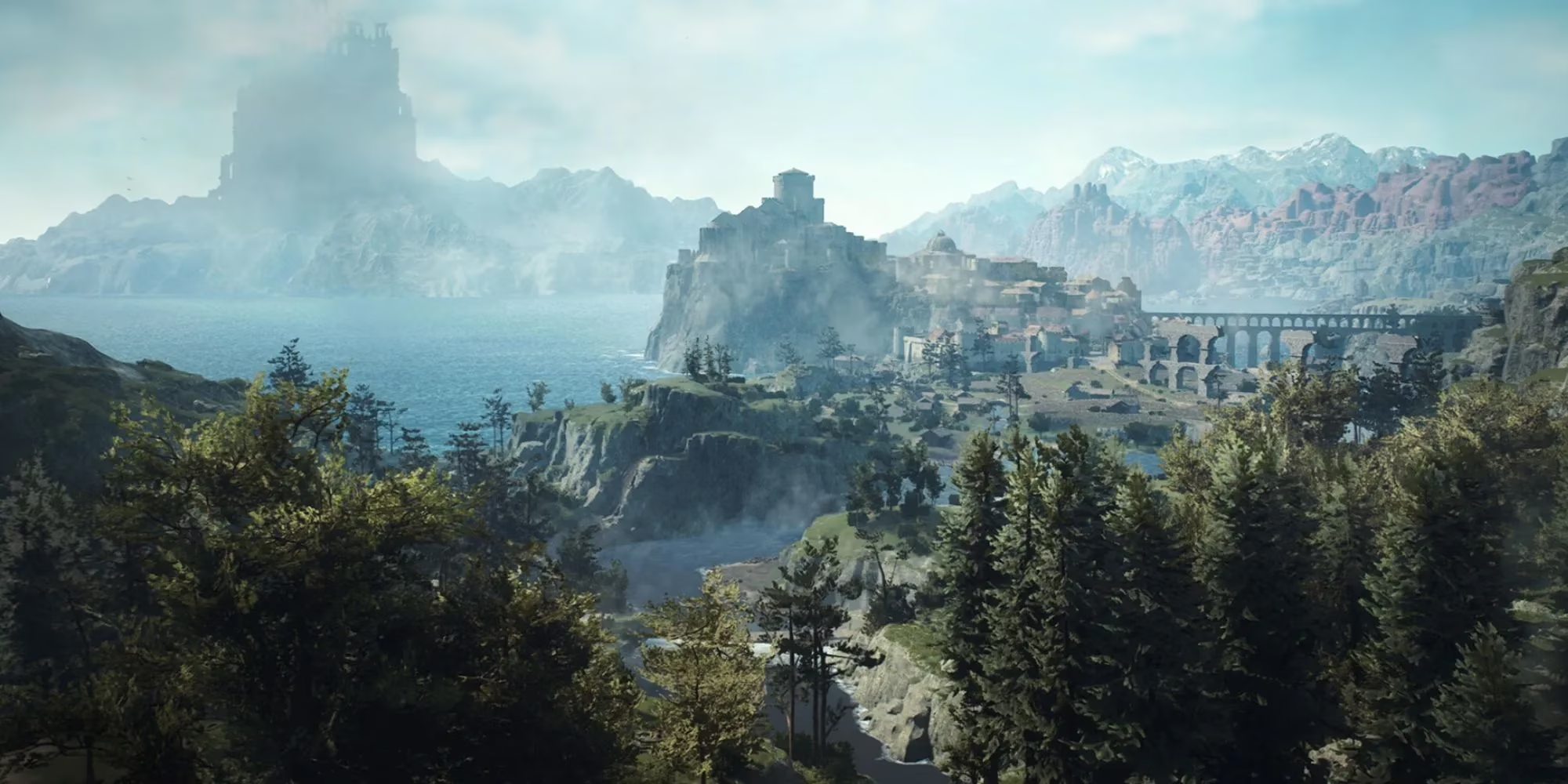
Itsuno's declaration wasn't a slight against the beloved house of Mario but rather a bold affirmation of his design philosophy. He elaborated that the game was crafted for a specific, dedicated audience who would deeply appreciate its intricate systems and uncompromising vision. "People who enjoyed it really loved it, appreciated the details and work," he stated, expressing his personal pride in the final product. This sentiment echoes through the critical sphere, where the game achieved impressive scores: an 86 on Metacritic, an 87 on OpenCritic, and a stellar 91% recommendation rate from professional reviewers. Publications praised its sprawling, treacherous open world, its masterful and weighty combat, and the endlessly charming Pawn system that defines the series.
However, the path for players was rockier. On platforms like Steam, the game garnered 'Mixed' reviews, a tag largely fueled by significant performance issues at launch—a recurring challenge for Capcom's PC ports. Critics, including TheGamer's own, noted these technical hiccups while still lauding the core experience's "incredible sense of adventure." Itsuno's serene acceptance of this bifurcated reception suggests a creator content with making a game that inspires passion, both positive and negative, rather than one designed by committee to please everyone.
The Anatomy of a Divisive Masterpiece
What exactly made Dragon's Dogma 2 such a talking point? Itsuno's vision was one of deliberate friction and rewarding exploration, a design ethos that doesn't hold the player's hand.
-
An Unforgiving World: The game's vast landscapes are filled with deadly creatures and perilous journeys that demand preparation. Fast travel is severely limited, making every expedition a committed trek into the unknown.
-
Pawn Brilliance: The AI companion system remains a series hallmark. Players can customize their main Pawn and recruit others created by fellow players worldwide, leading to unpredictable and often hilarious synergies in combat.
-
Combat Depth: From climbing towering cyclops to unleashing spectacular vocations like the mystical Mystic Spearhand, the combat system is a deep, physical, and satisfying spectacle.

Critical Acclaim vs. Player Frustration: A Tale of Two Audiences
A quick comparison highlights the reception gap:
| Metric | Score/Detail | Implication |
|---|---|---|
| Metacritic Score | 86/100 | \u2b50\u2b50\u2b50\u2b50\u2b50 "Universal Acclaim" from critics |
| Opencritic Score | 87/100 | Top Tier rating |
| Steam Review Score | Mixed (Initially) | Player frustration with performance |
| Key Critic Praise | "Masterful combat," "Incredible adventure" | Core gameplay loop highly praised |
| Key Player Critique | Performance issues, Microtransactions | Execution and business model friction |
This dichotomy is fascinating. While critics evaluated the artistic and mechanical whole, many players' experiences were gatekept by technical shortcomings. Itsuno's philosophical take suggests he views the core, intended experience—the one critics played and adored—as the true measure of the game's success.
Looking Ahead: Itsuno's Legacy and Future
As of 2025, Hideaki Itsuno's departure from Capcom and his new role at LightSpeed Japan Studio marks the end of an era. His reflections on Dragon's Dogma 2 serve as a fitting capstone to his tenure there. He didn't craft a universally accessible, polished-to-a-sheen "Nintendo game." Instead, he built a rugged, ambitious, and deeply idiosyncratic world that asked for patience and rewarded it with an unparalleled sense of discovery and combat mastery. ️⚔️
In an industry increasingly leaning toward live-service models and risk-averse sequels, Itsuno's willingness to embrace a mixed reception for the sake of a singular vision is both rare and commendable. Dragon's Dogma 2 may not have been for everyone, but for its ardent fans, it was everything they wanted—a testament to a director who knows his audience and isn't afraid to challenge them. The game stands not as a failure, but as a bold, flawed, and ultimately unforgettable expedition, much like the perilous journeys within it. Itsuno can indeed be proud; he made a true Dragon's Dogma game, through and through.