It's 2026, and a frustrating trend still haunts the gaming landscape: titles that build incredible momentum, introduce fascinating mechanics, and hook you into their worlds, only to roll the credits right when you're most invested. As a lifelong gamer, few things are more disappointing than that sinking feeling when you realize the adventure is over, not because the story reached a natural conclusion, but because it was cut short. The pacing just... stops. You're left staring at the screen, controller in hand, wondering, "Wait, that's it?" It's a special kind of blue-balling that transcends genre and budget, from sprawling RPGs to tight indie darlings. Let's dive into some of the most egregious examples of games that left us hanging right when things got good.
10. Elden Ring Nightreign: Tarnishing a Legacy
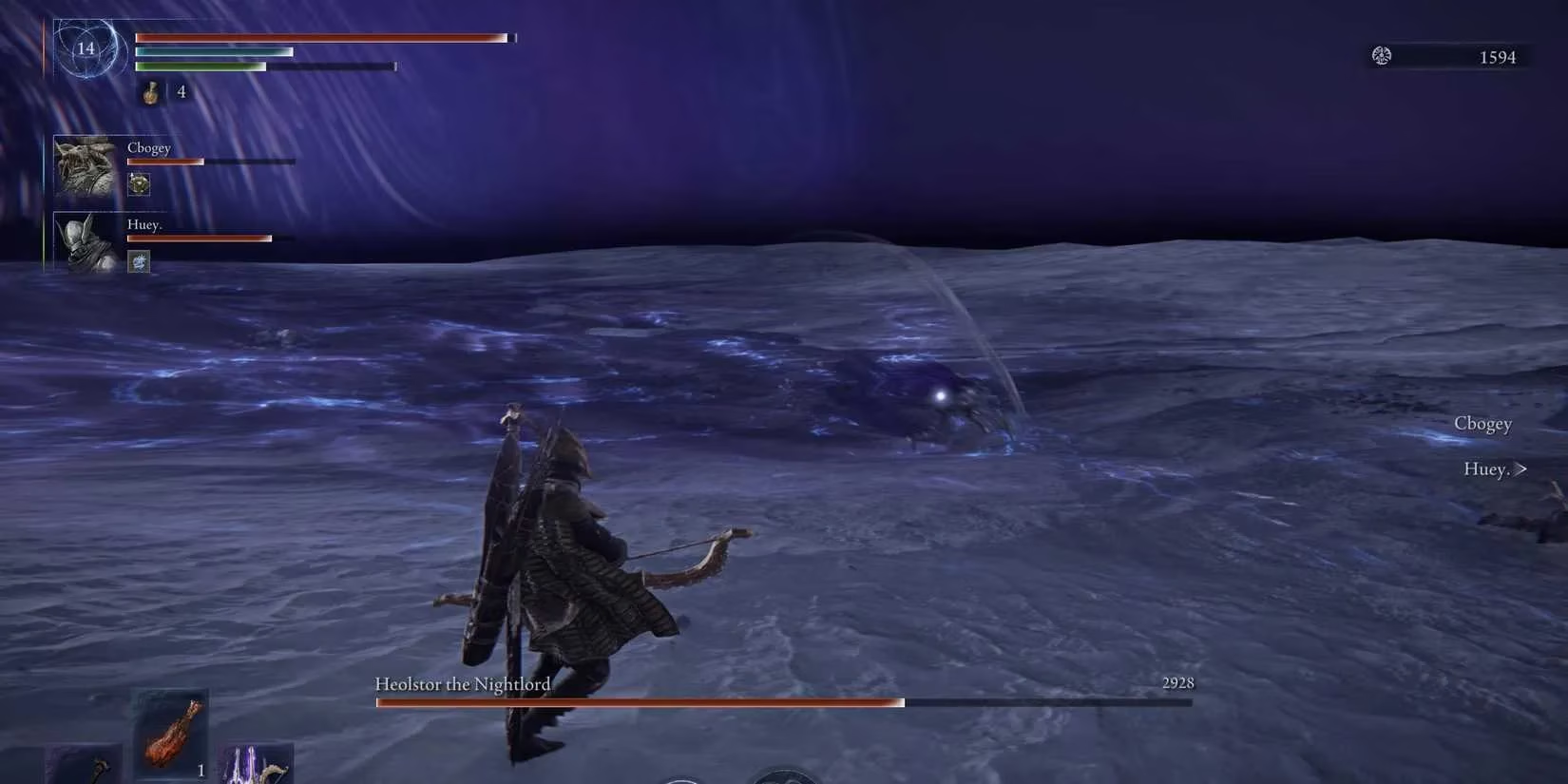
As a die-hard FromSoftware fan, this one hurt. Elden Ring Nightreign promised a new chapter but delivered what felt like a glorified expansion pack on launch. It reused so much from the base game that the truly unique content—those breathtaking Nightlords at the end of each expedition—felt like a cruel tease. 😭 You'd spend hours trekking through familiar lands, finally reach this phenomenal, legacy-worthy boss fight... and then the credits would roll. The combat was at its peak, the challenge was perfectly tuned, and then... nothing. Poof. For a studio known for dense, endlessly explorable worlds, ending the new content just as the new fights hit their stride was a devastating misstep. It was a service game in disguise, asking players to wait for updates to get the full experience we expected on day one.
9. Cocoon: Mastery Meets The End
Don't get it twisted—Cocoon is a masterpiece. From its first moments, it's a marvel of puzzle design and atmospheric storytelling. The whole "worlds within worlds" mechanic is mind-bendingly creative. But here's the kicker: the game ends just as you finally, truly get the hang of it. 🤯 You spend the first few hours wrapping your brain around the rules, the logic, the flow. Then, in the final stretch, it all clicks. The puzzles become intuitive, you're manipulating realities with ease, and the gameplay transforms from clever to profoundly compelling. And then... the final boss. No more worlds to unravel, no more complex layered puzzles. It's like finally learning to play a beautiful instrument perfectly, only for the concert to end after the first song. A beautiful, haunting loss.
| Game | The Crime | The Aftermath |
|---|---|---|
| Call of Duty: Ghosts | A 5-hour campaign with a huge cliffhanger. | A sequel that never came, leaving fans in limbo for over a decade. 😔 |
| Vanquish | A spectacular, adrenaline-fueled campaign that ends before you can savor it. | Left as a cult classic instead of the mainstream masterpiece it could have been. |
| Fallout 3 | A main quest that concludes with a whimper, not a bang. | Saved by incredible side content, but the core story feels abruptly truncated. |
8. Call of Duty: Ghosts: The Unfinished War
Time has been kind to Ghosts, recognizing its distinct, almost post-apocalyptic texture and unusual perspective within the CoD franchise. But let's be real: the campaign was criminally short. You blast through it in about five hours, the plot starts throwing out tantalizing threads about the Federation, the Ghosts' fate, and a radically changed world... and then it ends. On a massive cliffhanger. 🪂 Everyone, and I mean everyone, assumed a sequel was a sure thing. It was the only logical conclusion! But here we are in 2026, and "Ghosts 2" remains a meme, a piece of vaporware. We're permanently stuck with those unanswered questions, forever wondering what happened after things finally started getting serious.
7. Vanquish: A Shot of Adrenaline That Wears Off Too Fast
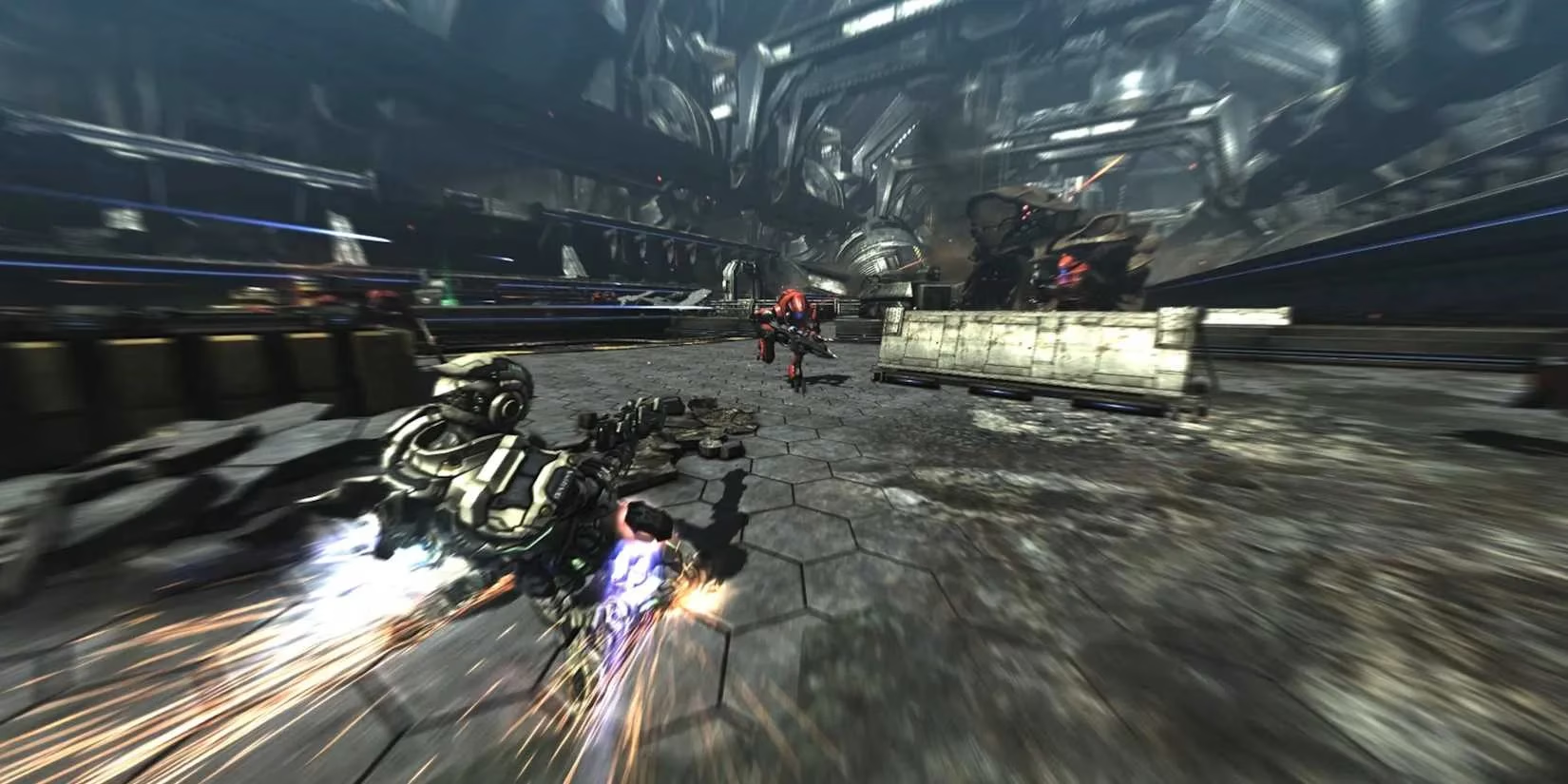
Vanquish is a pure, uncut dose of video game adrenaline. Sliding around at mach speed, blasting robots in slow-mo—it's a power fantasy perfected. The story? Yeah, it's packed with every sci-fi cliché in the book, and that's part of the charm. But in its final act, there are hints of something more interesting lurking beneath the surface. The plot twists, the setting gets used more effectively... and then it's over. 🚀 The campaign length is a betrayal of its own glorious mechanics. To truly savor the combat, to experiment with all the approaches, to face more of those insane bosses, the game needed to be at least twice as long. It ends right as you're hitting your stride, leaving you craving just one more mission, one more arena to conquer.
6. Fallout 3: The Capital Wasteland's Quiet Fade Out
Coming from the endless adventure of Skyrim, the ending of Fallout 3 was... confusing. The journey through the Capital Wasteland is iconic—discovering Megaton, navigating the Metro, the sheer sense of scale. But the main quest? It builds and builds, leading you to the Jefferson Memorial for a final choice that felt oddly small and unimpressive. I remember sitting there thinking, "No way. There has to be more. This can't be the finale." 🙅♂️ Without the game's phenomenal side quests and immersive exploration, Fallout 3 would be remembered very differently. The main story provides so much narrative room—room that was never filled by a truly impactful ending. It just stops, leaving the side content to pick up the slack.
5. Dragon's Dogma 2: An Ending That Feels Like a Mid-Point
The first game's ending was a mind-bending, genre-defying triumph. For the sequel, I wasn't expecting a repeat, but I also wasn't expecting... that. The initial "ending" feels so anticlimactic, like the credits rolled right before the final dungeon. When you refuse it and enter the Unmoored World, hope soars! This is it—the true endgame! But it's a brief, time-limited epilogue that ends before you can fully digest its implications or explore its potential. 🐉 The pacing completely falls apart. Everything up to that juncture is masterfully paced, making the abrupt, loose-end-leaving conclusion feel like the game ran out of budget or time. It doesn't feel like an ending; it feels like an intermission for a part that never arrives.
4. INSIDE: A Perfect, Fleeting Nightmare
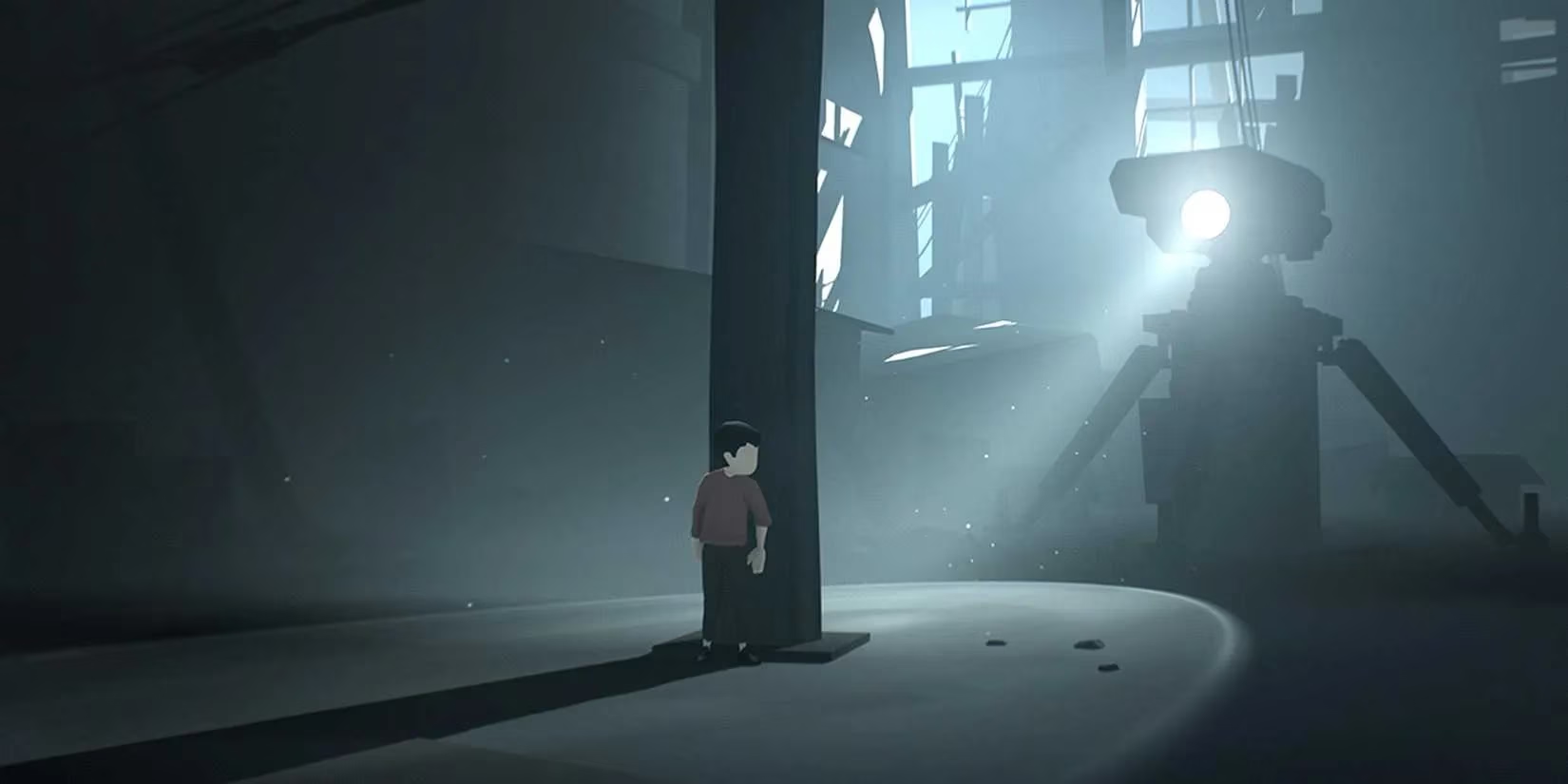
INSIDE is a landmark title. Its atmosphere is thick enough to cut with a knife, its puzzles are genius in their simplicity, and the chases are heart-pounding. It's a tightly wound coil of tension that never lets up. And perhaps that's why the climax, while shocking and memorable, also feels... premature. 😨 The world built is so rich, so ripe for deeper exploration—both in its haunting narrative and its puzzle mechanics. The ending catches you off guard not just with its content, but with its timing. It's a masterpiece, absolutely, but it's a masterpiece that leaves you desperately wanting to spend just a few more hours in its bleak, mesmerizing world. It ends when you are most deeply, utterly hooked.
The Hall of Shame: The Most Egregious Offenders
-
Deus Ex: Mankind Divided: A sequel that mechanically refined its predecessor but delivered a campaign that ends just as the core conspiracy plot kicks into high gear. It's not an ending; it's a stopping point for a sequel that may never come. A tragically half-baked experience.
-
Asura's Wrath: This one is in a league of its own. An epic, over-the-top story of divine rage builds to a cosmic climax... and then tells you the real ending is locked behind paid DLC. 😡 It's the most blatant, disrespectful case of cutting a game short for monetization. The base game slams the door in your face at the worst possible moment.
-
Half-Life 2: Episode 2: The granddaddy of them all. The king of cliffhangers. Just as the story reaches a fever pitch, just as long-awaited answers seem within reach, and just as the emotional stakes are at their absolute peak... it ends. Not with a bang, but with a fade to black that has tortured fans for nearly two decades. It's not just a cliffhanger; it's a historical artifact of narrative blue-balling, a wound that has never healed for an entire generation of players.
In 2026, with games as a service, DLC plans, and sequel baiting more common than ever, the trend of games ending just as they get interesting feels less like an accident and more like a design philosophy—or a cynical business strategy. It leaves players not with satisfaction, but with a hollow craving, forever wondering about the better, longer, more complete game that could have been. 🎮💔