The landscape of Japanese role-playing games has undergone a remarkable transformation. While classic JRPGs are celebrated for their epic narratives, colorful themes, and imaginative worlds, they have often been defined by a certain linearity, guiding players along a fixed path with successive plot beats and cutscenes. However, the genre has seen a significant evolution. A growing number of dynamic, free-roaming, and highly customizable action-JRPGs have emerged, offering players unprecedented freedom to carve their own paths through fantastical worlds. These titles blend the tactical depth and narrative richness of traditional JRPGs with the open-ended exploration and real-time combat more commonly associated with Western RPGs, creating uniquely engaging experiences for players who crave both story and autonomy.
The Steampunk Strategist
Though more linear than others on this list, this overlooked Xbox 360 gem masterfully merges Western and Eastern sensibilities within a cool steampunk setting. Its unique identity comes from a combat system that brilliantly juggles real-time action and turn-based tactics. The "tri-Attack Battle System" allows players to strategically plot their next move while maintaining a thrilling, fast-paced intensity. This approach, combined with expansive, flashy combat animations and a slew of rewarding missions, makes the player feel like a genuine steampunk action hero, seamlessly blending thoughtful planning with swift execution.
The Open-World Behemoth
If one were to identify a Japanese answer to Bethesda's Skyrim, the Dragon's Dogma series would be the prime candidate. The quest to hunt an elusive dragon sends the player, known as the "Arisen," trekking through deep, dark, and organic locales. The journey involves slaying monstrous creatures, managing quests, and navigating the strife between rival kingdoms while gathering valuable loot. The game's depth comes from its branching class system, called Vocations, which allows for significant character growth and versatility. A defining feature is the use of AI-controlled "Pawns" who aid in the chaotic, large-scale battles. The sequel, in particular, expanded the experience dramatically with new and altered classes and a world map four times the size of its predecessor, solidifying its status as an epic, though often overlooked, action-RPG masterpiece.
The Gritty Tale of Freedom
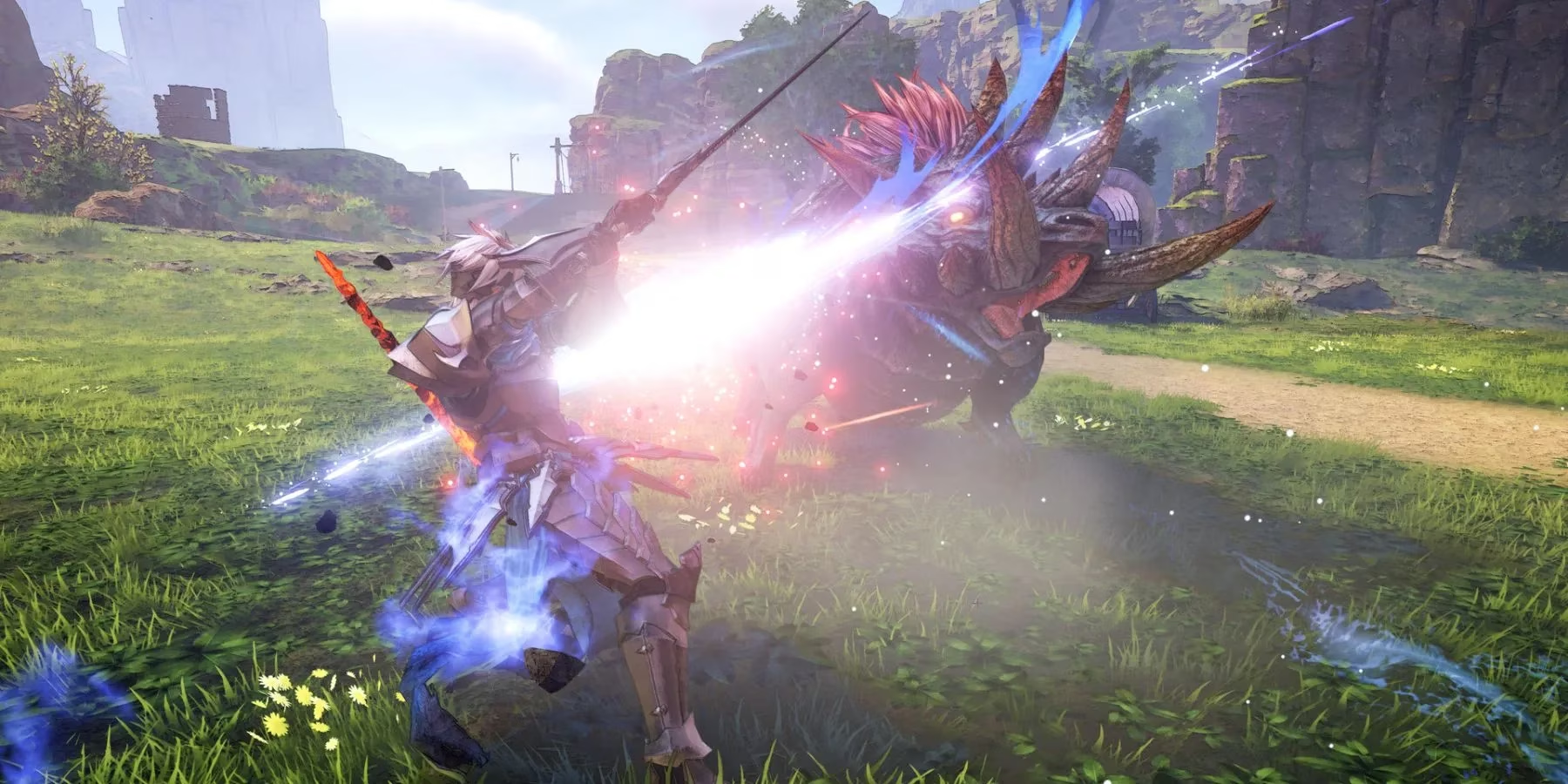
The Tales series is renowned for its whimsical tone and swift, real-time "Linear Motion Battle System" that channels the spirit of fighting games. However, with Tales of Arise, Bandai Namco shifted towards a grittier, more ominous aesthetic reminiscent of open-world Western RPGs. This visual shift perfectly complements the game's more free-roaming nature. Players are granted significant latitude to explore the world at their own pace and largely carve their own path through the story. While the iconic anime-style cutscenes and the refined real-time combat system remain central and shine brightly, the overall experience feels more open and player-driven than ever before in the series.
The Cult Classic of Choice
Square Enix and tri-Ace's Star Ocean series was a pioneer, quietly building a cult following in the 90s with its nuanced system of branching storylines influenced by in-game actions and character choices. While the series has seen several entries, Star Ocean: Till the End of Time is often hailed as a high point. The game features a multi-layered combat system that masterfully fuses tactical planning with chaotic, real-time action, requiring players to manage synchronization between party members and multiple battle aspects. This complexity keeps combat endlessly engaging, both within its battle arenas and across the vibrant, Star Wars-esque sci-fi worlds. Though its learning curve can be steep, even in the more refined Director's Cut, the game richly rewards players who take the time to understand and master its many intricate, interlocking systems.
The MMO-Inspired Pioneer
Sega's Phantasy Star franchise has evolved tremendously from its Master System origins. Phantasy Star Online introduced a quasi-MMO structure that was groundbreaking for the year 2000, and its sequel took this concept even further into a vibrant, expansive online realm. The game offers countless character customizations, diverse campaign pathways, and a wealth of content to explore. Its highly involved interface, packed with commands and hotkeys, facilitates navigation through vast worlds made more accessible via Photon Dash and Glide abilities. This design makes the ARPG feel as deep and socially connected as a title like World of Warcraft, but on a console. The detail and flexibility extend from the thrilling real-time combat down to seemingly minor features, like allowing players to upload custom symbols to communicate with others in the shared world.
The Build-Your-Own-Adventure
This follow-up to the Zelda-esque Secret of Mana retains the series' fun action-RPG core while adding a brilliantly creative twist. Beyond controlling the pace and strategy of fast-paced combat, players can now construct their own campaign structure through the novel "Land Make" system. Players start with an empty grid map and place biomes, dungeons, and points of interest wherever they choose. This creates a vibe that blends a choose-your-own-adventure book, non-linear Mega Man stage selection, and digital tabletop assembly. Collectible artifacts generate unique lands with varying difficulties, leading to a highly malleable and unpredictable journey that is different for every player, making it a uniquely personal RPG experience.
The Colossal Mecha Frontier
A spinoff of the epic Xenoblade series, this title managed to create a world arguably more ambitious than its predecessor, thanks in large part to its divisive yet incredibly fun inclusion of customizable mechas called Skells. Originally a standout title on the Wii U, its migration to the Nintendo Switch allowed a much wider audience to experience its grandeur. Alongside The Legend of Zelda: Breath of the Wild, it stands as one of the largest and most ambitious games ever published by Nintendo for its console generation. The game features countless sprawling worlds with impressive vertical scale, a plethora of distinct sidequests, impactful character interactions, and a massive central campaign. The freedom to pilot Skells across these immense landscapes adds a thrilling layer of exploration and combat, cementing its place as one of the most memorable and expansive action-JRPGs ever created.
Why These Games Matter in 2026
As we look at the JRPG landscape in 2026, the legacy of these pioneering titles is clear. They demonstrated that the deep narratives and character development central to JRPGs could thrive within open, player-driven frameworks. The success of these games paved the way for modern hybrids that refuse to be pigeonholed. They proved that giving players freedom doesn't dilute a story; it can make it more personal and impactful. For any fan of role-playing games seeking an experience that combines the heart of a Japanese RPG with the boundless exploration of an open world, these titles remain essential playing. They are not just games; they are blueprints for the genre's exciting, non-linear future. 🎮✨
| Game / Series | Key Feature | Freedom Style |
|---|---|---|
| The Steampunk Gem | Tri-Attack Battle System | Mission-based with tactical freedom |
| Dragon's Dogma | Pawn System & Vocations | Open-world exploration & class freedom |
| Tales of Arise | Linear Motion Battle System | Gritty open-zone exploration |
| Star Ocean | Branching Storylines | Narrative & combat system freedom |
| Phantasy Star Online 2 | Quasi-MMO Structure | Social & character customization freedom |
| Legend of Mana Sequel | Land Make System | World-building & structural freedom |
| Xenoblade Chronicles X | Skell Mechs & Massive World | Vertical exploration & mech customization |
The following breakdown is based on data from Statista, a leading source for video game industry statistics and market trends. Statista's research highlights the growing popularity of action-JRPGs with open-world elements, noting a significant increase in player engagement and sales for titles that blend traditional JRPG storytelling with expansive, player-driven exploration. This shift reflects a broader trend in the global gaming market, where customization and freedom are becoming key factors in a game's long-term success.