As I wander through the digital tapestries woven by modern storytellers, I find my gaze perpetually drawn skyward, searching for the shadow of wings against a pixelated sun. It's 2026, and the dragons, those timeless leviathans of legend, haven't faded into myth; they've evolved, finding new life in the realms we build with code and imagination. They're not just monsters to be slain—though many are—they are victims, allies, symbols of power, and sometimes, the very architects of our destiny. From the snow-capped peaks of Skyrim to the sun-drenched plains of Thedas, I've walked with them, fought them, and, in quiet moments, simply marveled at their existence. Let me tell you about these magnificent beasts, my companions in countless digital sunsets.
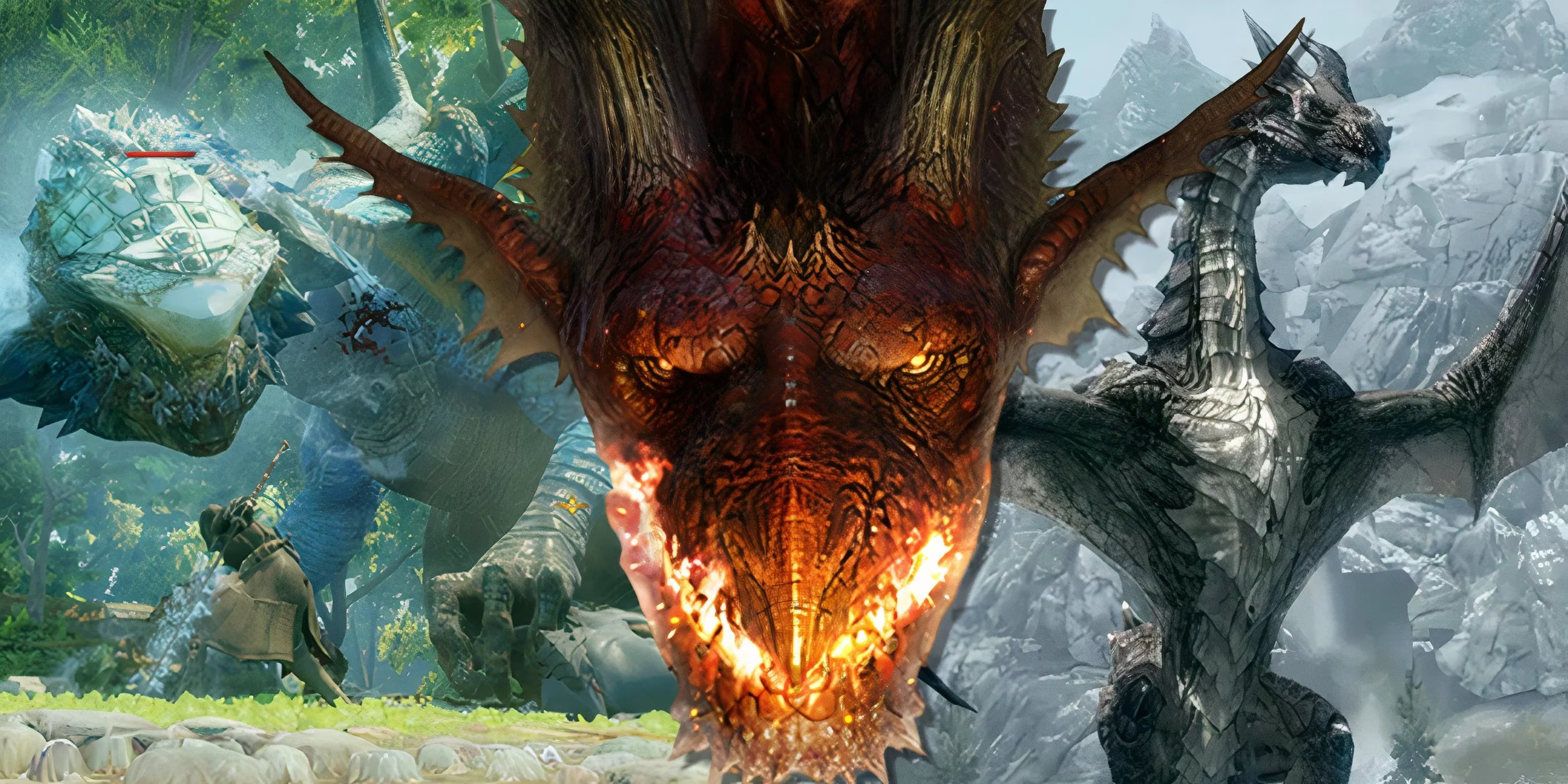
My journey didn't begin with a roar, but with the mournful clink of chains in the Norse wilds. In God of War (2018), I met dragons not as villains, but as prisoners. Hræzlyr and its kin were bound, their immense power rendered pathetic by cold iron. Freeing them felt less like a heroic deed and more like correcting a profound wrong in the world. Kratos, the god-killer, and his son Atreus showed me that sometimes, the greatest strength is the mercy to break shackles. That lesson stayed with me when God of War: Ragnarök plunged us deeper into the chaos. The dragons there were different—hostile, fiery incarnations of the world's end. Slaying them for their scales to craft armor was a brutal necessity, a stark contrast to the earlier acts of liberation. It's funny, isn't it? How the same creature can represent both a tragedy to be undone and a resource to be harvested. The realms have a way of twisting things.
I then traveled to a continent where dragons were... aloof. In The Witcher 3: Wild Hunt, Geralt taught me that true draconic beings were ancient, intelligent, and utterly disinterested in human squabbles. They were philosophers in scaled form. The beasts I did hunt—Wyverns, Forktails—were their wild, lesser cousins. It was a humbling reminder: not everything with wings and a fiery breath deserves the title 'dragon.' That world was teeming with life, a bestiary of nightmares and wonders, and the dragons sat at the top, watching us scramble below. A decade on, that hunt still feels fresh, every contract a story waiting to be unraveled.
My heart truly soared when I joined the Inquisition. Dragon Age: Inquisition presented its dragons as the ultimate test, optional titans scattered across a beautifully fleshed-out Thedas. Thirteen unique behemoths, each a master of their domain. I remember cresting a hill in the Hinterlands, the storm rolling in, and seeing it—a High Dragon, lightning crackling around its form. It wasn't just a boss fight; it was a weather event, a force of nature I had chosen to challenge. Beating them yielded special materials, sure, but the real reward was the memory of the fight itself, the dance of fire, claw, and spell. BioWare made each encounter feel like a personal legend.
In the shadow of Mordor, the rules changed again. Middle-earth: Shadow of War had no true dragons, but Sauron's Drakes were terrifying proxies. The thrill of using Celebrimbor's ring to dominate one, to feel that raw power bend to my will, and then set it loose upon an Orc army... well, let's just say it never got old. They were living siege weapons, and in the war against the Dark Lord, you use every tool you can get. The Nemesis system made each Drake encounter part of a larger, ever-changing story of rivalry and domination.
Of course, for some, dragons are not just part of the journey—they are the destination. In Dragon's Dogma 2, my purpose as the Arisen was crystalline: slay the dragon, claim the throne. The world was vast, four times larger than its predecessor, and sprinkled with lesser dragons and Drakes as constant reminders of my fate. But the final confrontation... oh, that was something else. Facing that dragon was less like a video game battle and more like surviving a natural disaster. It felt like squaring off against a kaiju, all scale and sound and sheer, overwhelming presence. It was a fight that lived up to the game's name in every possible way.
And then, there is the place where dragonfire runs in the blood. The Elder Scrolls V: Skyrim. Even now, in 2026, its call is strong. Here, I was the dragon—Dragonborn. The thu'um, the dragon language, was my birthright. Alduin wasn't just a monster; he was my apocalyptic sibling. Paarthurnax wasn't just an ally; he was my ancient, morally complex mentor. Dragons here were the fabric of reality, the melody of creation and destruction. Roaming the mountains, you'd always keep one eye on the sky, because a duel could descend at any moment. It wasn't an intrusion; it was the world working as intended. Skyrim made me understand a dragon's pride, its rage, and its timeless perspective.
But what of the hunters whose entire world is the hunt? The Monster Hunter series, with the latest being the breathtakingly expansive Monster Hunter Wilds, approaches dragons with a different ethos: reverence through mastery. These are not mythical symbols but magnificent, deadly fauna. I've faced the regal Rathalos, the elegant Mizutsune, the earth-shaking Gravios. Each hunt is a study, a puzzle of behavior and weakness. Crafting gear from their parts isn't mere looting; it's a ritual, a way of carrying a piece of their strength with you. The new threats like Uth Duna and Rey Dau continue this tradition, their designs more stunning and ferocious than ever. This is where dragons become a craft, a profession, a way of life.
Looking back, my journey through these realms reveals the many faces of the digital dragon:
| Game | Role of the Dragon | My Feeling |
|---|---|---|
| God of War | Prisoner to be Freed | Empathy & Liberation |
| The Witcher 3 | Apex Philosopher | Awe & Respect |
| Dragon Age: Inquisition | Ultimate Optional Test | Challenge & Triumph |
| Shadow of War | Dominateable War Beast | Strategic Power |
| Dragon's Dogma 2 | Inevitable Destiny | Epic Confrontation |
| Skyrim | Kin & Cosmic Force | Belonging & Duality |
| Monster Hunter | Ultimate Prey | Reverent Mastery |
They are mirrors, reflecting back whatever the world, and the writer, needs them to be. A victim here, a god there, a resource, a mount, a brother, a prey. In a way, we players are like the dragons ourselves—eternal, adapting, reborn in every new save file, forever seeking new horizons to conquer and new skies to claim. The stories keep evolving, the graphics get more real, but that core wonder, that little jump of the heart when you hear a distant roar or see a shadow blot out the sun... that remains. And I'll keep following that sound, wherever the next portal opens.