When Dragon’s Dogma 2 launched in March 2024, it didn’t just continue the cult-classic saga—it redefined expectations. Within its first 11 days, the game sold an astonishing 2.5 million copies, propelling the franchise’s total lifetime sales past the 10 million mark. By 2026, that momentum has only accelerated, cementing Dragon’s Dogma as one of Capcom’s cornerstone properties alongside heavyweights like Monster Hunter and Resident Evil. The sequel’s blend of atmospheric dread, clever companion AI, and bold narrative choices resonated with both veterans and newcomers, but it also laid bare areas ripe for refinement. As the gaming landscape evolves, all eyes are on Capcom to see how the series will adapt in its next chapter.
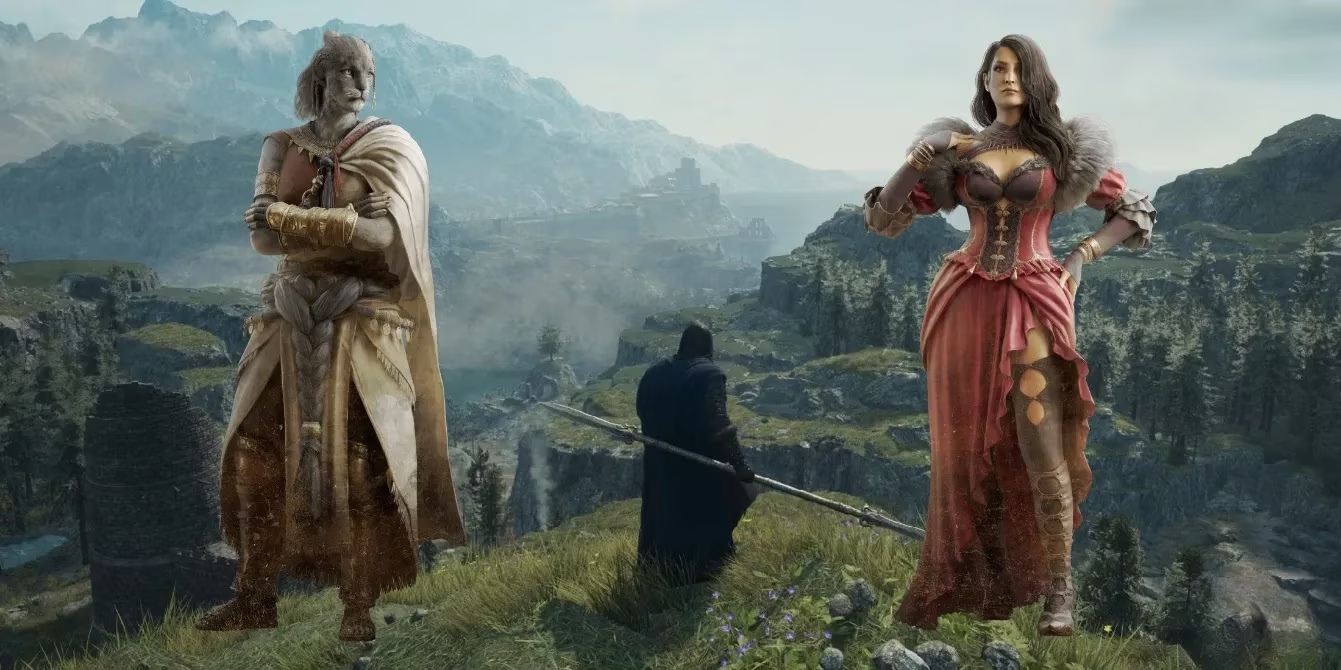
The original Dragon’s Dogma was praised for its oppressive nights and unscripted encounters, and the 2024 sequel doubled down on that essence. Moments of genuine terror—like a lantern dying just as ghostly whispers fill the air—remained, but they were bolstered by a more human-like Pawn system. These AI companions now react to the player’s choices with startling nuance, from commenting on party composition to displaying situational wariness. Yet the star narrative addition was the Beastrans, a feline race originally envisioned by director Hideaki Itsuno for the first game. Their integration enriched the lore, creating a society that views Pawns as omens and rejects the Arisen’s divinity. This cultural friction deepened the world-building and gave players fresh role-playing angles, hinting at even more untapped storytelling potential.
Despite its triumphs, Dragon’s Dogma 2’s sprawling open world exposed a friction point: travel fatigue. Explorers who reveled in uncovering hidden grottos and ancient ruins eventually found the constant monster gauntlets draining. A journey meant for wonder could devolve into a slog when a giant cyclops ambushed moments after dispatching a flock of harpies, all while a dragon’s roar echoed from the nearby peaks. Community feedback since 2024 has consistently urged for smarter pacing—perhaps by reducing random encounter frequency in already-traveled regions or unlocking rapid transit options in the late game. A future installment could keep the thrill of discovery without punishing retreading roads.
Equally divisive was the romance system. The first game’s laissez-faire approach—where nearly any NPC could become a beloved, including same-sex partners—was a quiet beacon of inclusivity. The sequel, however, restricted romantic pathways to a handful of female characters, sidelining players who role-played as straight women or queer Arisen. Many recalled the emotional sting when a cherished male companion was relegated to “just a friend” during the climax. In an era where titles like Baldur’s Gate 3 celebrate fluid relationship systems, this felt like a step backward. A future Dragon’s Dogma title would do well to reintroduce broad romantic agency, ensuring everyone can see their story reflected in the game’s heart.
The commercial tidal wave that followed Dragon’s Dogma 2’s release has almost certainly greenlit further investment. By 2026, Capcom’s financial reports hint at a “major unannounced fantasy project” in development, and industry insiders speculate it is either a sizable expansion akin to the original’s Dark Arisen or a full-fledged sequel. Given the 2.5 million copies sold in under two weeks and the sustained interest driven by post-launch updates, the publisher has every reason to double down. Director Itsuno, celebrated for his work on Devil May Cry, remains a guiding force, and his early concepts—like the original Beastran vision—show a creator eager to realize long-held ambitions.
Looking ahead, the path seems clear: preserve the series’ signature danger and emergent storytelling while smoothing the friction of travel and embracing inclusive design. The Pawn system could evolve to feature deeper emotional bonds and personalized quests, and the Beastrans might expand into playable characters or full-fledged faction campaigns. With a robust modding scene already breathing new life into Dragon’s Dogma 2 by 2026, Capcom would be wise to support community creativity officially. The franchise that once seemed like a hidden gem now has the spotlight—and the resources—to become a genre-defining fantasy epic. If the next chapter listens to its devoted player base, the future of Dragon’s Dogma could well be legendary.