Let’s not beat around the bush: Dragon’s Dogma 2 is a brilliant action RPG, but the lingering smell of its microtransaction shop still follows it around in 2026. I have sunk more hours than I care to admit into the Arisen’s journey, and the combat, pawn system, and open-ended exploration are still top-tier. Yet every time I recommend the game to a friend, someone pipes up about the “pay-to-win” headlines. That reputation has been tough to shake.
💰 What’s in the shop, exactly?
The controversy isn’t about gear with massive stats or locked story content. It’s about convenience items that feel a little too close to the bone. Players can buy Rift Crystals directly with real money, which is a resource I normally earn by helping pawns and exploring the Rift. Those RC can then be turned into useful things like a Portcrystal—a placeable warp point—or pawn-related boosts. The catch? Warping still burns a consumable Keystone, and you can’t buy those in the shop. So even the convenience has friction.
Other items raised eyebrows too. The Art of Metamorphosis, which lets you redesign your character, and Wakestones, which revive fallen party members, are all purchasable. Sure, you can earn them through normal play. But that didn’t stop players from calling the whole thing an unnecessary cash grab.
| Item | What It Does | Earnable In-Game? |
|---|---|---|
| Rift Crystals | Currency for Portcrystals and pawn services | Yes |
| Portcrystal | Placeable fast-travel point | Yes, via RC |
| Wakestone | Revives fallen characters | Yes |
| Art of Metamorphosis | Unlocks character editor | Yes |
🎮 Capcom’s playbook is old hat
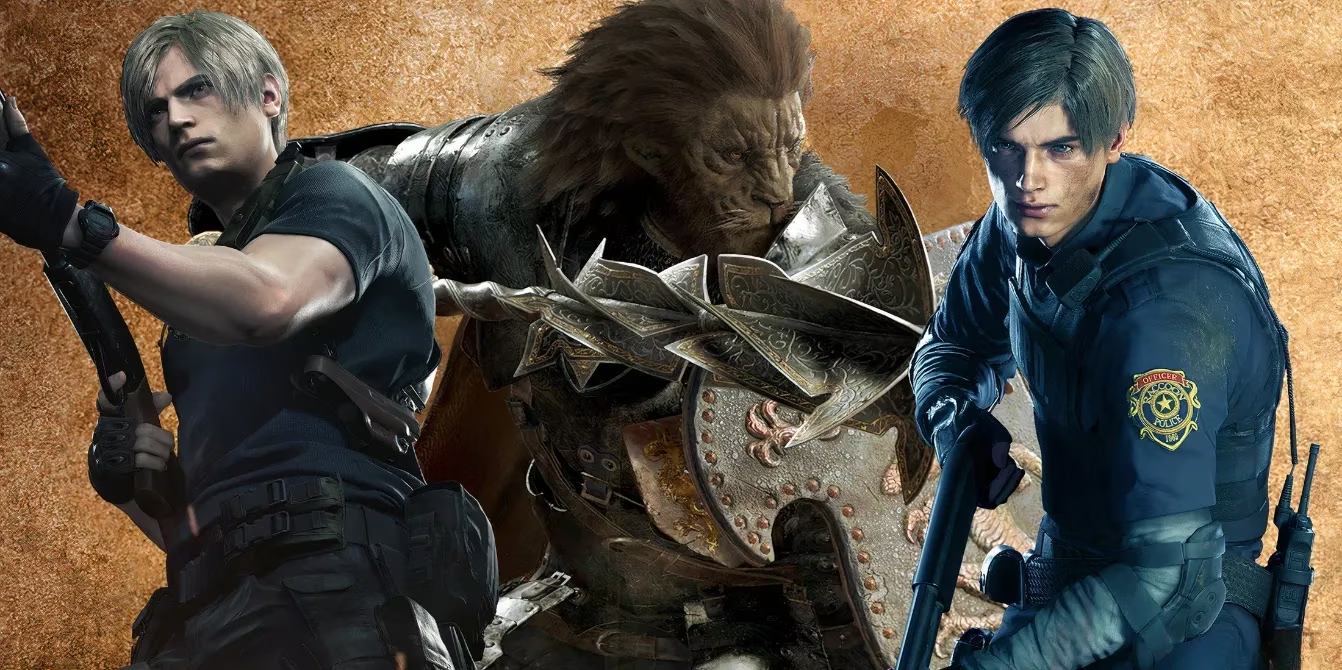
If this feels like déjà vu, that’s because it is. Capcom has been running the same play for years. Resident Evil 4 Remake sold Exclusive Weapon Upgrade Tickets to skip grind. Resident Evil 2 Remake let you buy in-game rewards directly. Resident Evil Village pushed its Extra Content Shop, and Devil May Cry 5 sold revival orbs. I’ve heard the defense a million times: “You can earn everything in-game, so it’s not pay-to-win.” Fair enough, but that doesn’t make the business model any less exhausting. It’s paying for convenience, and Capcom is clearly in love with that idea.
The kicker? These games have been huge. Dragon’s Dogma 2 reportedly sold over 2.5 million copies, and the Resident Evil releases have done even better. Negative fan reactions have ranged from mild annoyance to full-on rage, but the sales keep rolling in. That’s the uncomfortable truth: as long as the core gameplay is solid, a chunk of players will grit their teeth and buy the game anyway.
🧭 The 2026 reality check
Looking ahead from 2026, the industry has changed but the debate hasn’t. Monster Hunter Wilds launched in 2025, and I watched that launch like a hawk. Fans were already sensitive after Dragon’s Dogma 2, so Capcom had to tread carefully. So far, the conversation around Wilds has been less explosive, but the threat of backlash never really goes away. If Capcom ever starts selling layered armor with actual stat advantages or locking meaningful progression behind a paywall, the community will grab the pitchforks.
Post-launch support is also a double-edged sword. Multiplayer titles like Street Fighter 6 live and die by their content updates, and microtransactions there feel less like a bonus and more like the rent. For single-player action RPGs, though, the rules are different. Gamers like me are willing to forgive a lot if the world is immersive and the combat clicks. But forgiveness has limits.
Capcom will almost certainly keep cashing in on convenience microtransactions. The company has made that clear across multiple franchises. What it needs to figure out is how to do it without making loyal fans feel like walking wallets. Dragon’s Dogma 2 already learned that lesson the hard way, and for the sake of future Arisen, I hope the message stuck.