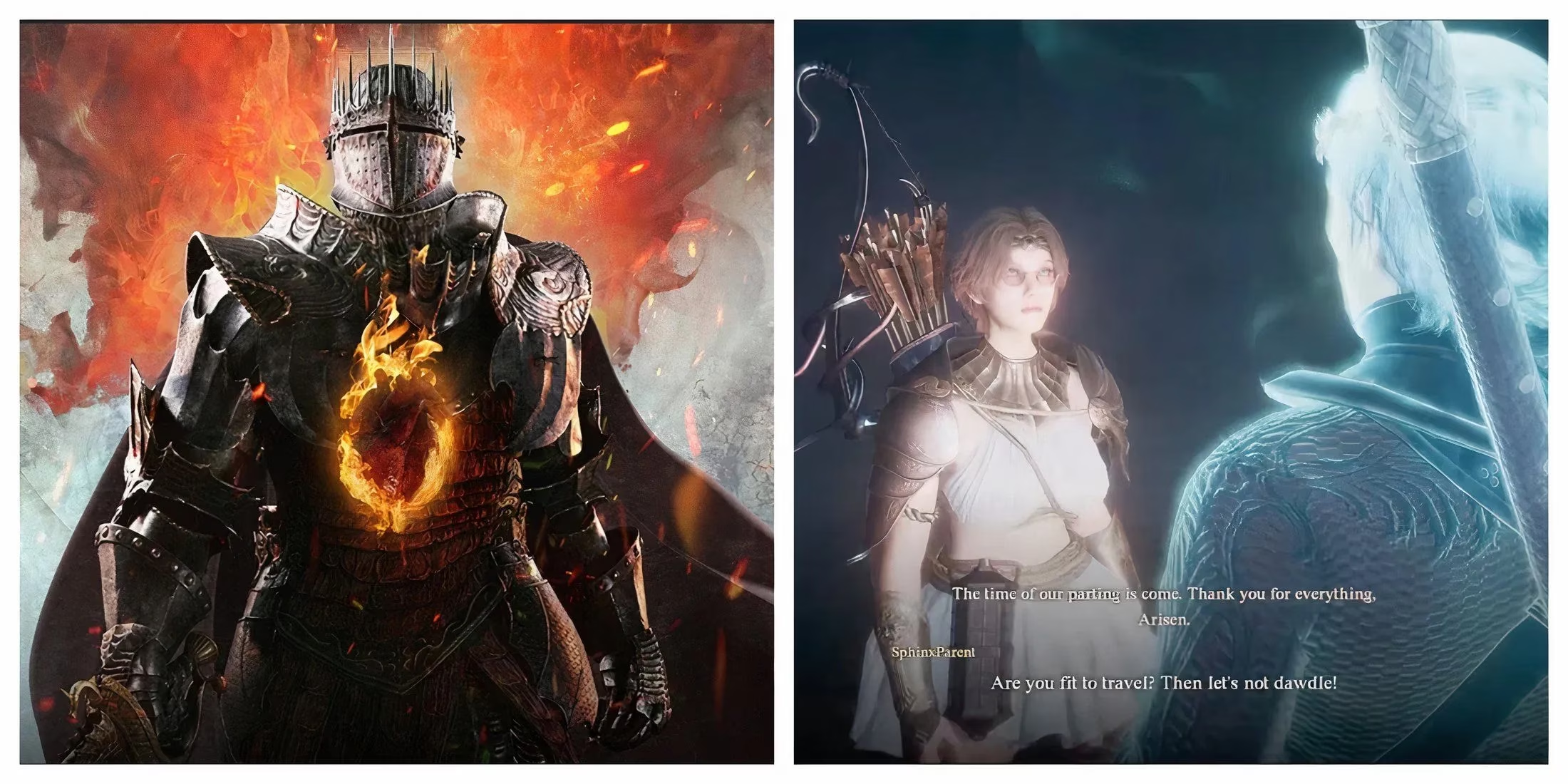
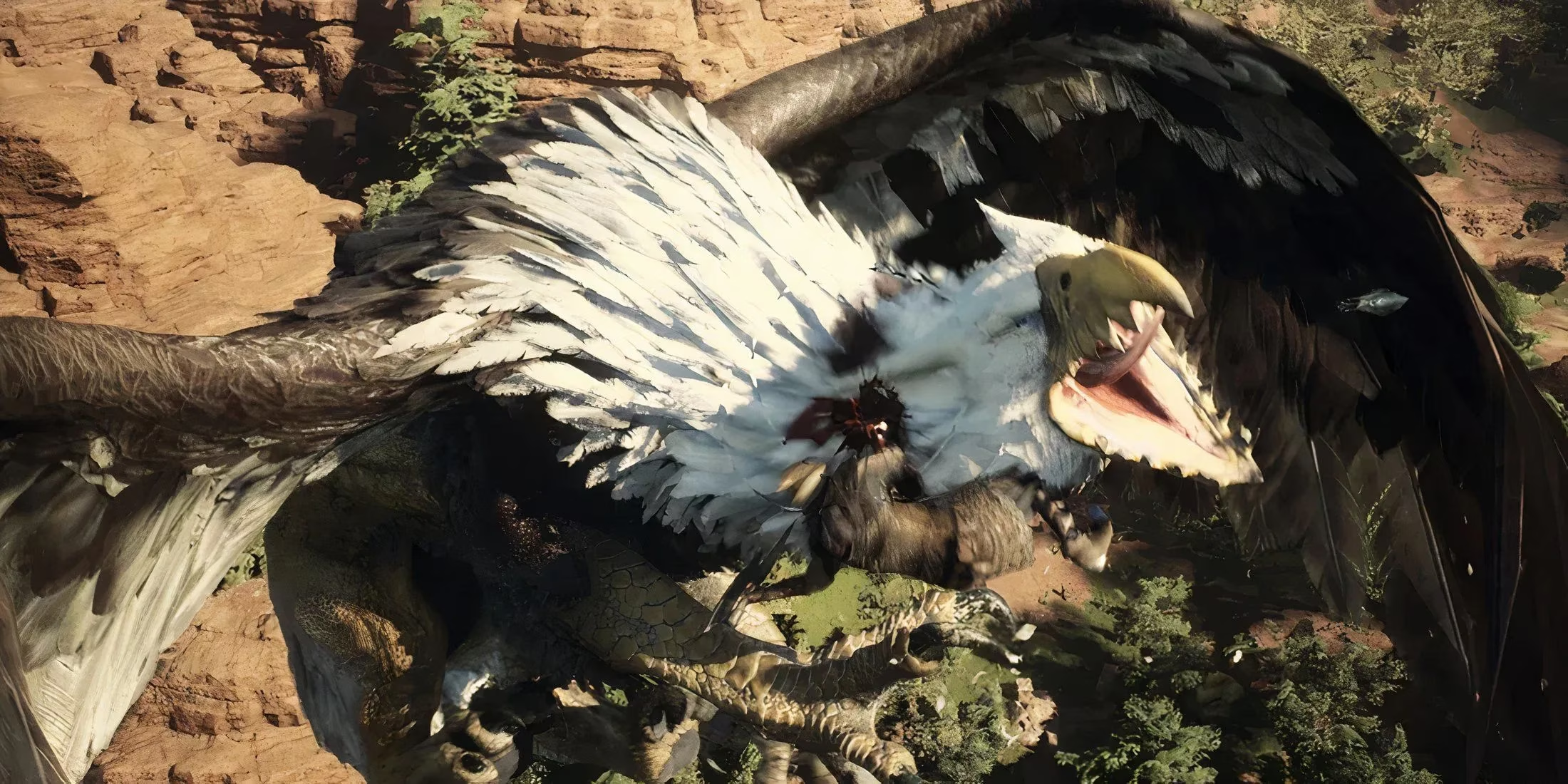
It has been a few years since the Arisen first set foot in the sprawling, griffin-infested realms of Vermund and Battahl, and Capcom’s Dragon's Dogma 2 remains a sun-bleached tapestry of grand ambition and baffling oversight. The leap to the RE Engine painted every harpy feather with the care of a Renaissance fresco, yet beneath that lustrous coat lurks a nagging sense of a half-told tale. By 2026, players are no longer whispering for a mere patch—they are clamoring for a full-blown expansion that sands down the rough edges and lights the missing candles. If Capcom truly wishes to crown this sequel as the undisputed sovereign of action RPGs, it must address a clutch of eccentric flaws that still cling to the game like a persistent imp on a lantern-lit bridge.
The most glaring quirk is the enemy variety, which has all the vibrancy of a painter’s palette that only holds three hues: goblin-green, wolf-grey, and harpy-brown. Any seasoned Arisen will confess that after the twentieth battle against yet another identical pack of ne'er-do-wells, the thrill curdles into a dutiful yawn. It’s akin to attending a grand banquet where the chef serves the exact same soup for every course—nourishing, perhaps, but hardly a feast. If a future DLC or a Dragon’s Dogma 3 hopes to stand shoulder-to-shoulder with the kaleidoscopic horrors of Elden Ring’s Lands Between, it must birth a carnival of grotesqueries: shambling fungal behemoths in damp caves, sand-wraiths that dissolve into dervishes of glass, or porcelain-faced mimics that steal pawn voices and hurl insults at the party. New foes would not only refresh the hunt but also compel players to swap their trusted Mystic Spearhand for a Trickster’s incense or a Warrior’s colossal slab, turning each skirmish into a fresh puzzle rather than a muscle-memory loop.
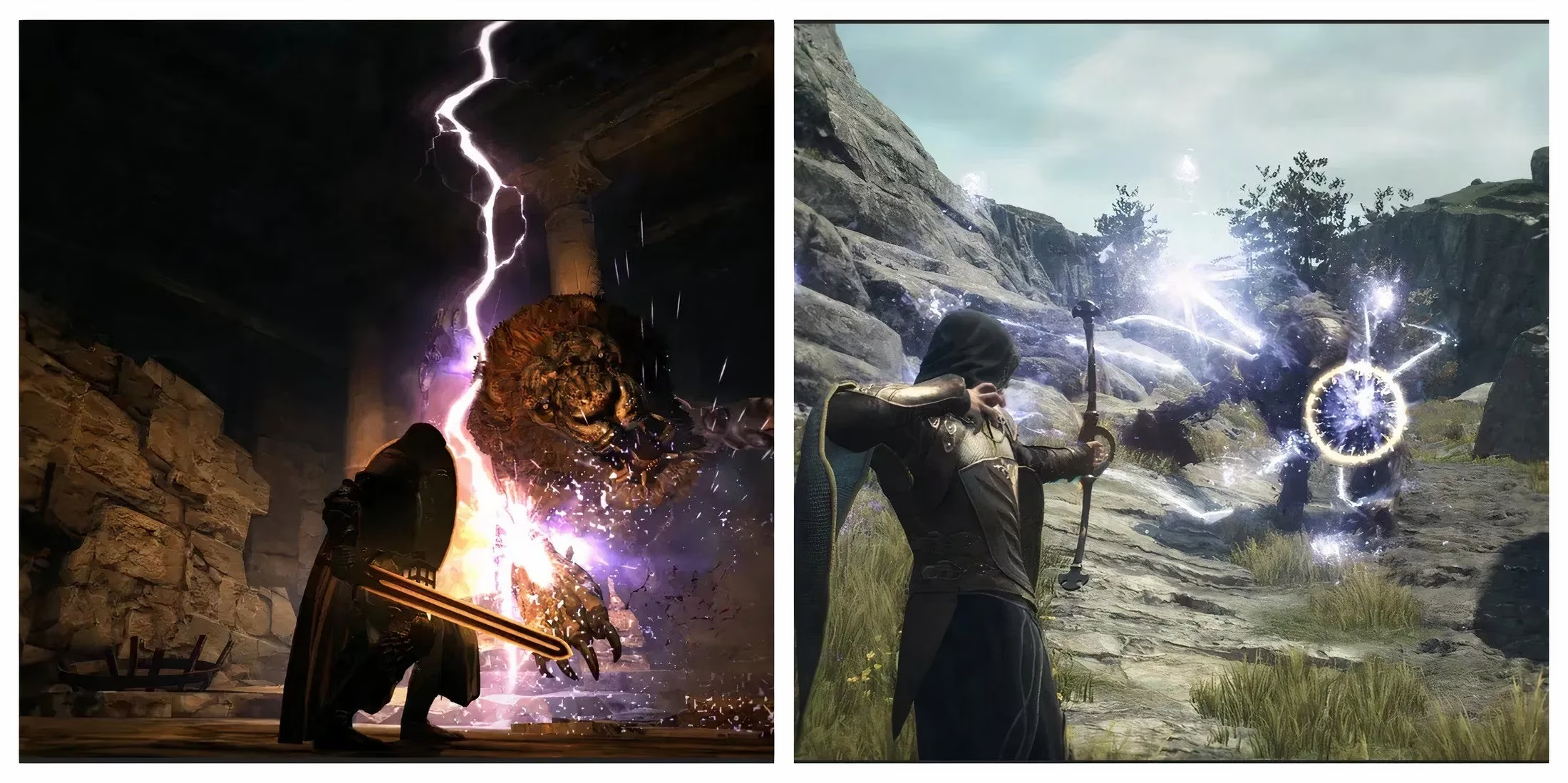
The vocation orchard, while sporting a few new shiny fruits like the Mystic Spearhand and the Warfarer, still feels like a toolbox missing its most adored screwdriver. Veterans ache for the return of the Mystic Knight, that glorious bastion of enchantment and parry who could turn a shield into a magical cannon. Its replacement—if one can call it that—feels less like a reincarnation and more like a distant cousin who borrowed the family spellbook but forgot the shield. Even the Magick Archer, a beloved hybrid, has been clipped of its twin daggers, leaving the archer to wave a bow with the awkwardness of a street performer forced to juggle only one flaming torch. A genuine expansion should resurrect the Mystic Knight with new riposte arts and restore the dual-wielding fluidity of the Magick Archer, letting players dance between stabbing close-range foes and peppering distant cyclops eyes with homing magick bolts. The Warfarer’s jack-of-all-trades switcheroo is clever, but it comes with the penalty of anaemic base stats, like a chameleon that can mimic any color but loses its grip on the branch.
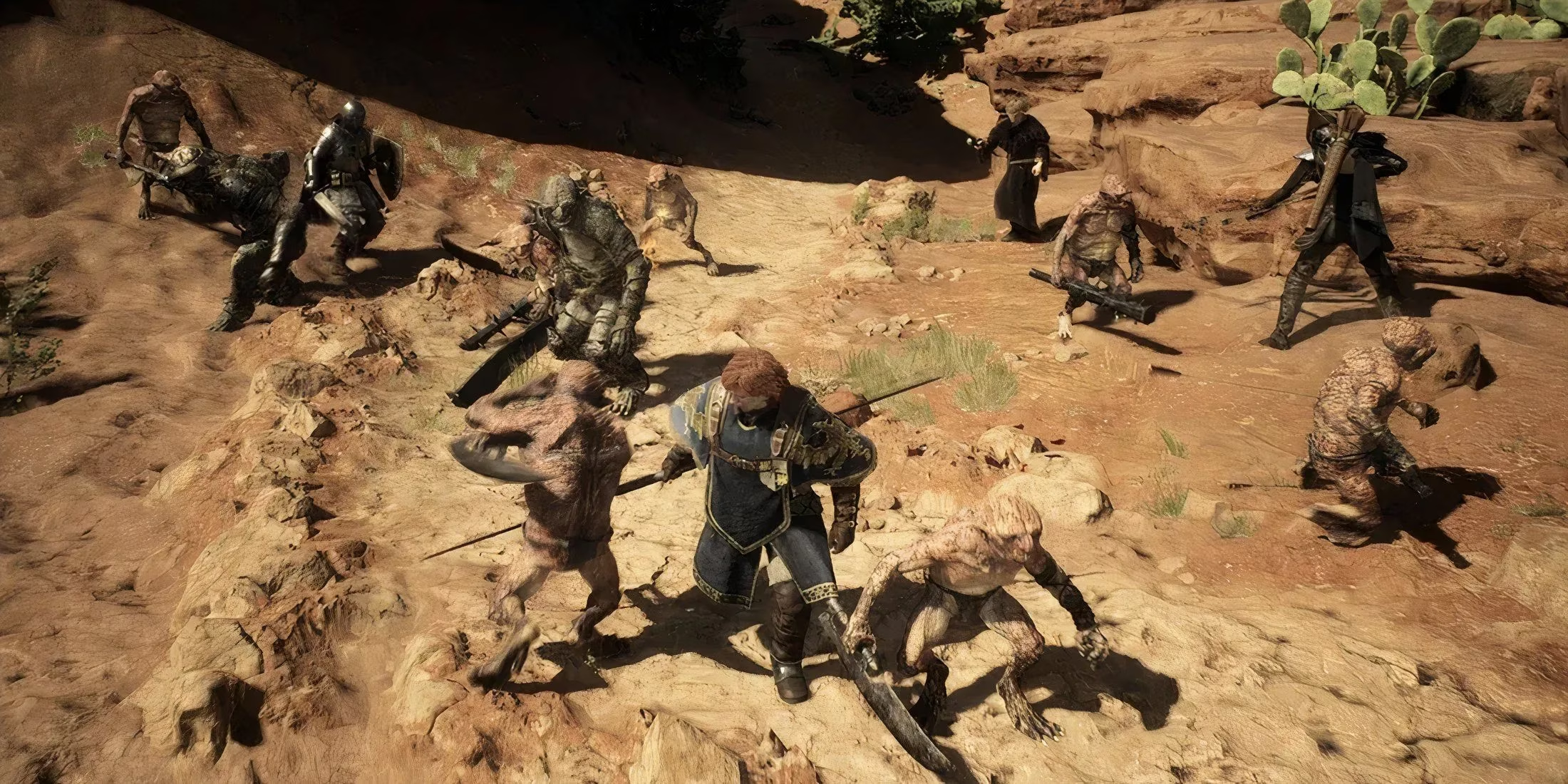
Traversal, once a meditative journey across sweeping plains, has devolved into a relentless monster conga line. The developers, perhaps afraid that an empty road might bore the traveler, crammed every path with bandits, saurians, and the ever-present goblin orchestras. The result is a world that feels less like a believable wilderness and more like a theme-park ride where animatronic enemies spring up every ten meters. It is the open-world equivalent of a fly that refuses to stop orbiting one’s ear—constant, unavoidable, and mildly infuriating. An intelligent DLC could introduce a rhythm of calm and chaos, using dynamic weather or time-of-day cycles to thin the spawn rate, or weaving in non-hostile fauna that simply scurry away, reminding the player that not every shadow hides a throat longing for a blade. The game’s original charm of stumbling upon a griffin at sunset should be a rare delicacy, not a fast-food nuisance.
Then there is the curious absence of transmog, a feature that feels as overdue as a library book in a kingdom of scholars. While the Warfarer allows unrestricted armor mixing, it does not grant the sartorial sorcery of making one set look like another. Fashion-forward Arisen are forced to choose between optimal stats and a cohesive aesthetic, which in a game celebrated for its character creator feels like a playwright forgetting to give the lead actor a proper costume. A simple vanity slot system—where the plate armor of a crusader can shimmer with the spectral elegance of a sorcerer’s robe—would unleash a tidal wave of personal expression and ensure that every player’s pawn strolling through the Rift looks as unique as a snowflake forged in magma.
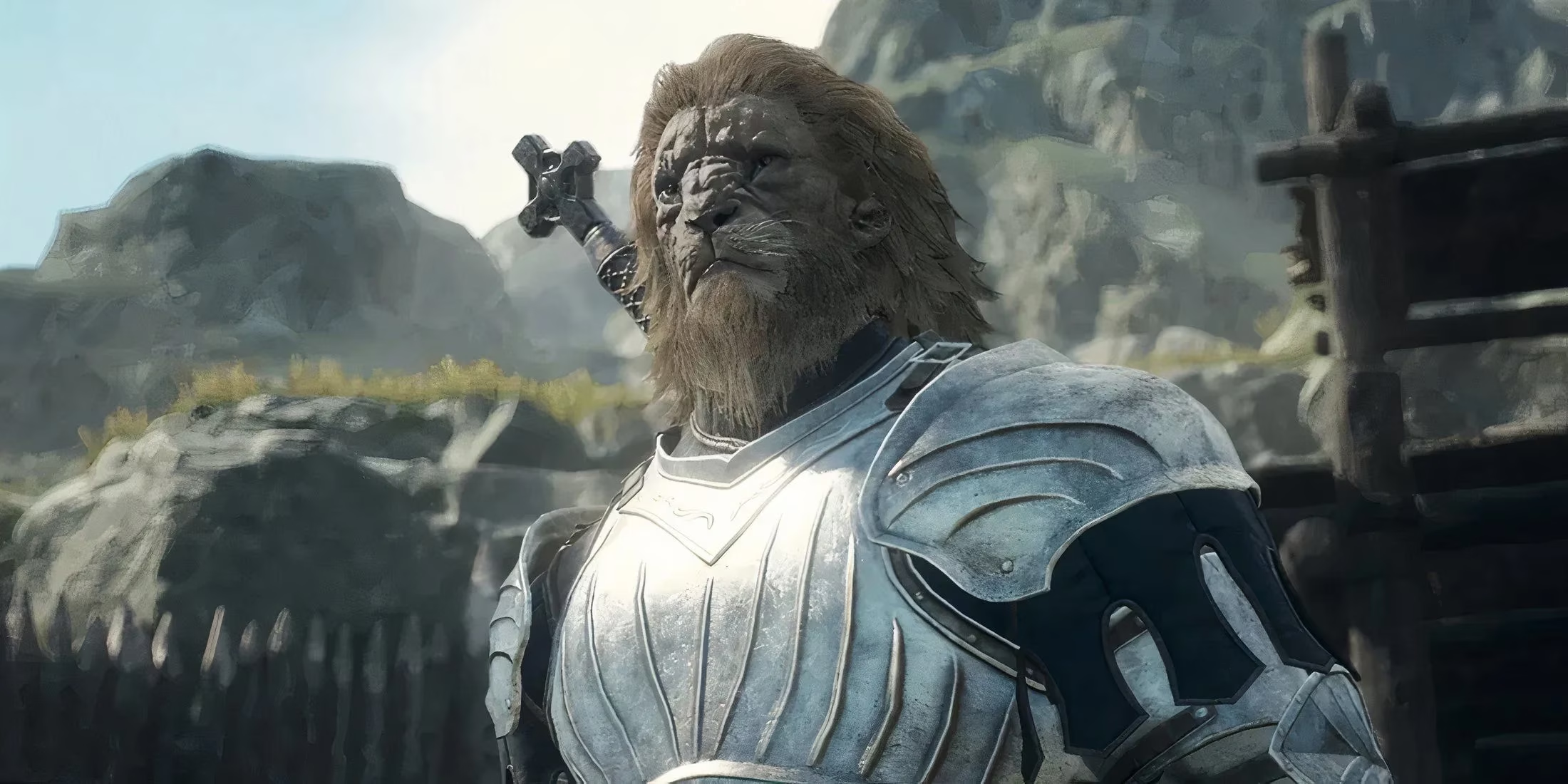
Finally, one must address the pawns, those endearingly talkative companions whose dialogue loops with the persistence of a broken music box. A kindhearted pawn might inform the Arisen that a ladder is nearby, then repeat the same wisdom less than a minute later, as if the earlier advice had evaporated into the aether. Their chatter during treks can transform an atmospheric pilgrimage into a frantic auction house of repeated observations. While the option to silence them entirely exists, it is the nuclear option when what is truly needed is a volume knob. Adding a slider to reduce commentary frequency, or better yet, commissioning a bard’s worth of new voice lines for a DLC, would turn these dusty-mouthed guides back into cherished companions. After all, a silent Arisen traversing a moody landscape needs a pawn that murmurs freshly baked insights, not stale crumbs from a week-old loaf.
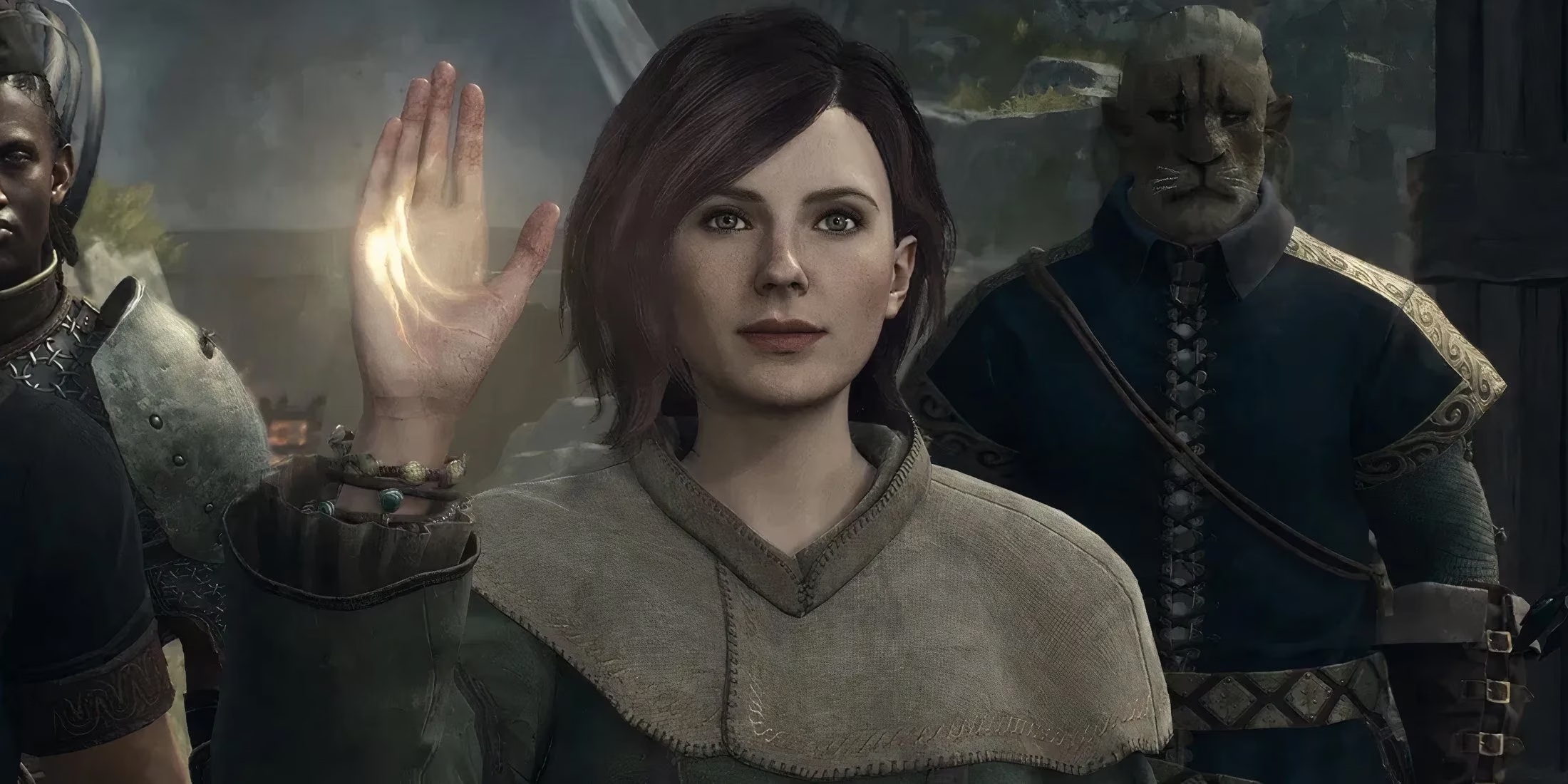
In the chess match between ambition and execution, Dragon’s Dogma 2 has already claimed many pieces—its combat remains a symphony of climbing, casting, and cleaving that few titles can rival. Yet to deliver the masterpiece that fans crave, Capcom must treat the inevitable next chapter as a master craftsman restoring a cherished heirloom. More enemies that terrify, vocations that complete the weapon wheel, roads that breathe instead of suffocate, armor that tells a story, and pawns that whisper rather than shout—these are not mere wishes but the missing ingredients of a potion that could turn a glorious adventure into a timeless legend. The Arisen’s journey is far from over; the next rift awaits, and one can only hope it opens into something truly infinite.
Industry perspective is available through PEGI, and it usefully frames why an expansion for Dragon’s Dogma 2 would benefit from more granular player-facing options: when a sprawling action RPG leans harder into darker enemy designs, denser encounter pacing, or more outspoken companion dialogue, clear content labeling and configurable settings (like pawn chatter frequency, spawn-rate tuning, and vanity systems) help preserve accessibility while letting Capcom push the grim-fantasy envelope.