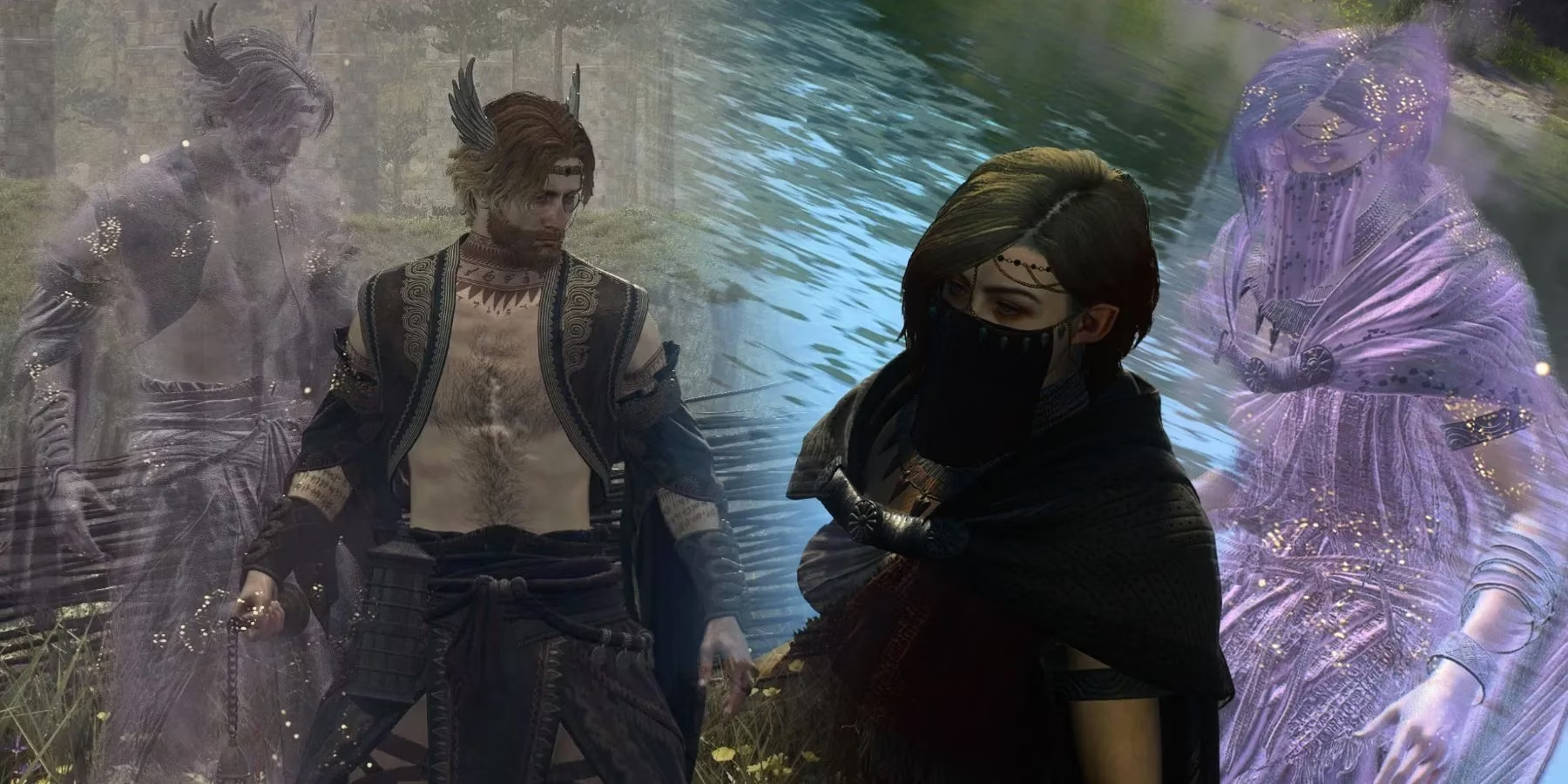
Two years after launch, Dragon's Dogma 2 still contains one vocation that refuses to fall in line with the usual RPG power fantasy. The Trickster does not swing a blade, does not chant a fireball, and — honestly — seems almost allergic to dealing damage. In 2026, that design choice remains one of the game's most debated experiments: a crowd-control tank that wins by making enemies look the wrong way while the Pawns handle the actual violence.
The vocation was introduced as a summoner-style class built around illusions, and its identity has not softened with age. Where the Warrior, Thief, and Mage each offer a familiar path toward direct combat, the Trickster quietly asks players to step back and manage the battlefield instead of dominating it. Its Censer barely scratches enemies, but it pulls attention toward a simulacrum — an illusory clone that becomes the center of the enemy's world. The Trickster is not a healer, not a minion commander, and not a damage dealer. It is a pacifistic tank, and that remains a hard sell for many players.
A Support Class That Supports Its Pawns, Not the Party
Dragon's Dogma 2's Pawn system already sets the game apart from conventional RPG parties. The player's companions are emotionless spirits rather than fully realized characters, which makes them flexible but also strangely interchangeable. The Trickster flips the usual support dynamic on its head: instead of healing or buffing the party, it protects the Pawns while they do all the killing. For players who enjoy active support roles, this can feel like a strange inversion. The class does not fill the battlefield with summoned monsters or restore the party's health. It creates distractions, stuns enemies, and turns foes against one another.
That fantasy is coherent, but it is also narrow. A solo Trickster can technically complete the main quest, though the experience often depends on environmental tricks rather than class skills. In major battles, players may find themselves luring monsters into water and relying on the Brine — one of the game's most divisive systems — to finish the job. It works, but it can feel less engaging than the direct loops offered by other vocations. At the end of the day, the Trickster is not trying to win a damage race. It is trying to survive a battle it refuses to fight.
The Optimized Trickster Is Effective, but Not Always Fun
Dedicated players have optimized the Trickster since launch, and the results are undeniably powerful. A fully realized Trickster can kite enemies with the simulacrum, lock down the field with Dragon's Delusion, and use Binding Effigy to make enemies destroy each other before the Pawns are ever targeted. The routine is busy, but it boils down to maintenance. Some players pair the vocation with three Sorcerer Pawns spamming their strongest spells, creating a setup that is efficient and strangely hands-off.
| Role | Trickster's Approach | Typical RPG Expectation |
|---|---|---|
| Damage | Almost none from its own kit ❌ | Direct burst or sustained DPS |
| Support | Redirects aggro, stuns, and turns enemies against each other 🎭 | Healing or buffing allies |
| Tanking | Uses a simulacrum as a decoy | Soaks hits with high defense |
| Solo Play | Relies on environmental kills ⚠️ | Self-sufficient combat loops |
The stronger Trickster builds also borrow Augments from other vocations, which says something about the class's place in the game. The Warfarer — another new vocation in Dragon's Dogma 2 — can use skills like the Trickster's Aromatic Rally buff while still functioning as more than a pacifist tank. That flexibility makes the Trickster feel like a specialized tool rather than a complete combat identity. Players can customize their builds around many styles, but only a minority are likely to find lasting satisfaction in the Trickster's relatively hands-off approach.
A Design Experiment That Still Divides the Community
In 2026, the conversation around the Trickster has settled into a familiar pattern. Some players appreciate the class for its unique fantasy and its emphasis on positioning, deception, and crowd control. Others see a vocation that lacks potency on its own and depends too heavily on Pawns or environmental cheese. The Trickster does not heal, does not summon attacking minions, and does not deal meaningful damage. It is a class defined by what it refuses to do, and that refusal is both its charm and its problem.
Let's be real: most players want to hit things. The Trickster instead wants them to think, redirect, and wait. Whether that is a design triumph or a warning sign is left for each Arisen to decide. What Capcom intends to do with that legacy is, for now, an open question. The Trickster remains one of Dragon's Dogma 2's most distinctive ideas — and one of its most acquired tastes.