Back in 2024, Dragon's Dogma 2 was one of the year's most hotly anticipated releases. While it managed to overcome early controversies surrounding microtransactions and performance—issues that were largely resolved or based on misinformation—the game has never fully extinguished the flames of debate surrounding one of its core design choices. Even now, in 2025, the conversation continues to simmer, centered squarely on a system that was always meant to be restrictive: fast travel.
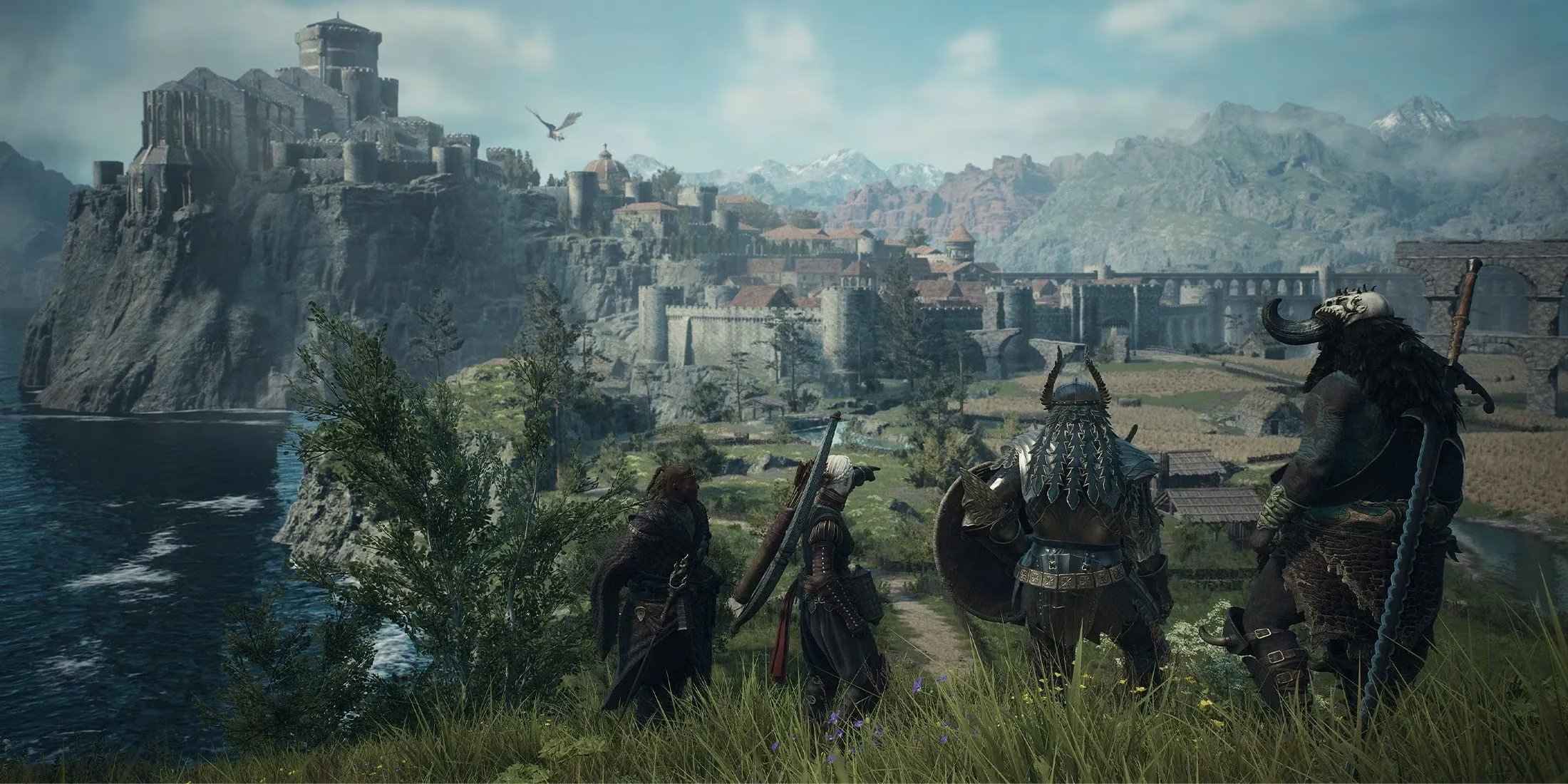
Let's be real for a second—the game's approach to getting around is, well, a choice. Capcom designed Dragon's Dogma 2's world to be traversed on foot, intentionally making fast travel a costly and limited resource to force exploration. The system isn't absent, but it comes with strings attached... and those strings are pretty heavy. Players can zip between placed Portcrystals, but only by using rare and expensive Ferrystones. The alternative is hitching a ride on an Oxcart, but that's hardly a relaxing commute. More often than not, those carts are ambushed by monsters, turning a simple trip into an unexpected brawl. It's the game's not-so-subtle way of saying, "Hey, no shortcuts here."
This philosophy was at the heart of the initial microtransaction uproar. Many gamers, looking from the outside in, saw the expensive Ferrystones and jumped to the conclusion that Capcom was planning to sell convenience. That wasn't the case, but the damage to the system's reputation was done. Capcom defended its vision pre-launch, arguing that a compelling open world negates the need for excessive fast travel. The studio's stance was clear: the journey itself should be the reward.
However, a significant portion of the player base hasn't fully bought into that vision. The criticism is that the world, while visually diverse, doesn't always provide enough engaging variety to justify the slog. A common gripe is the perceived lack of enemy diversity on these long treks. Fighting the same foes repeatedly while trudging across the map can make the experience feel more tedious than thrilling. It's a bit like being told to enjoy a scenic road trip, but the radio only plays one song on loop. The destination might be great, but the getting there? It can be a grind.
Fast Travel Mechanics at a Glance:
| Method | Resource Required | Key Limitation |
|---|---|---|
| Portcrystal & Ferrystone | Ferrystone (Single-use, Rare/Expensive) | Must manually place Portcrystals first |
| Oxcart | Gold (Fare) | High chance of interruption by monster attacks |
| On Foot | Time & Patience | No mounts available; the default (and slowest) option |
This ongoing tension creates a major headache for the game's future. Capcom has been actively polling the community about potential DLC, making additional content a near certainty. But here's the million-dollar question: how do you expand a world that many players already find cumbersome to navigate? Adding new lands beyond the existing map could backfire spectacularly. If the DLC announcement is met with, "Great, even more ground to walk," enthusiasm could quickly wane.
For any DLC to succeed, it will likely need to work within the constraints of the current controversial system or offer a completely self-contained experience. Imagine a new area that's either densely packed within the existing borders or is accessed via a one-way portal to a separate, smaller zone. The core design philosophy of Dragon's Dogma 2 has painted its future into something of a corner. The game's world was built to be endured as much as it was to be explored, and that's a legacy that's proving hard to outrun.
In the end, Dragon's Dogma 2's fast travel isn't just a mechanic; it's a statement. It's a bold, uncompromising vision of what an open-world RPG can be—one that prioritizes a sense of scale and journey over pure convenience. Whether players see that as a daring artistic choice or a frustrating design flaw... well, that debate is still very much alive. And as 2025 unfolds, all eyes are on Capcom to see how they'll navigate this self-imposed challenge when the time comes to expand their ambitious, and divisive, world.