For years, I, like many, had a singular vision of what a Japanese Role-Playing Game should look like—vibrant colors, characters with impossibly large eyes and gravity-defying hair, worlds pulsing with a cartoonish energy. It was a style I loved, but one that began to feel like a comfortable, predictable blanket. Then, in 2026, my gaming perspective was fundamentally reshaped when I deliberately sought out experiences that defied this very aesthetic. I embarked on a quest to discover JRPGs that traded the flamboyant for the grounded, the exaggerated for the authentic, and in doing so, I found some of the most immersive and emotionally resonant worlds in the genre.
My journey truly began with Dragon’s Dogma 2. From the moment I stepped into its world, I was struck by a profound sense of place. This wasn't a stylized fantasy land; it was a living, breathing, and often brutal interpretation of a European medieval setting, built with the stunning fidelity of the RE Engine. The connection was visceral. I remember the first time I faced a griffin—its feathers were not brightly colored plumes but dense, weathered layers that caught the light realistically. The armor of my pawns clanked with a tangible weight, and the landscapes, from craggy cliffs to dense forests, felt authentically worn by time and elements. The game’s commitment to human proportions and nuanced expressions made every triumph and loss feel intensely personal. It was a raw, unfiltered fantasy that rejected anime vibrancy for a grittier, more believable heroism.
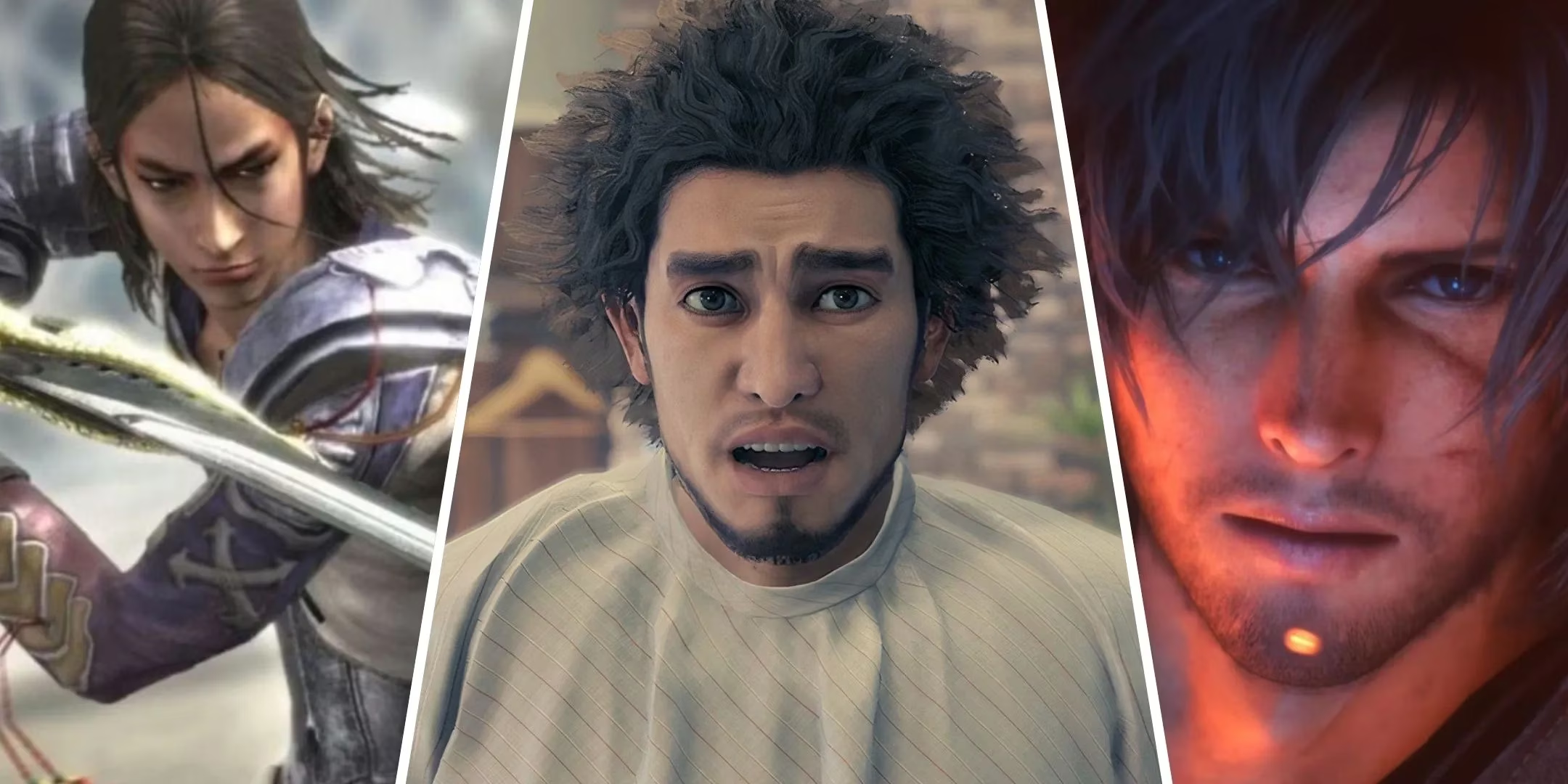
Seeking more of this grounded feel, I revisited The Last Remnant. Its sprawling political drama, centered on the power struggle for ancient Remnants, was elevated by its visual restraint. The cities and fortresses, modeled on medieval Europe, felt vast and tangible. There was magic and fantastic creatures, yes, but they were integrated into a world with realistic textures, subdued lighting, and a muted color palette. The characters’ neutral, believable faces made the weighty political intrigue and large-scale military conflicts land with a seriousness often absent in more stylized titles. It was a clear early signal that a JRPG could target a global audience not by diluting its mechanics, but by presenting its complex world with a cinematic, realistic sheen.
Perhaps the most stylistically daring detour I took was into the world of Resonance of Fate. This game didn’t just avoid anime aesthetics; it actively embraced a chic, cinematic Western style. My characters weren’t in flamboyant costumes but in sleek long coats and tailored leather, navigating a grimy, industrial steampunk cityscape. The combat, revolving around acrobatic gunplay, was as unique as its look. The color palette was sober, the textures gritty, and the overall atmosphere felt like a playable, post-apocalyptic action film. It was a brilliant reminder that ‘realism’ in JRPGs doesn’t have to mean historical fantasy—it can mean forging a completely distinct, mature visual identity.
My exploration led me back to a classic that I’d somehow missed: Parasite Eve. Blending survival-horror with turn-based RPG mechanics was innovative enough, but its visual direction was a masterstroke. Trading fantastical locales for a meticulously recreated, moody 1990s New York City was terrifyingly effective. As Aya Brea, investigating supernatural horrors in real-world landmarks, the game’s rejection of anime visuals in favor of a cinematic horror aesthetic made every shadow and puzzle profoundly immersive. It proved that a JRPG’s setting could be its most powerful character, and that realism could amplify tension and narrative depth to incredible levels.
The shift in mainstream acceptance of this style became undeniable with Final Fantasy XVI. Here was a flagship franchise decisively pivoting. Valisthea was a brooding, dark-fantasy realm of political machinations, realized with a stark, cinematic realism. Stone fortresses, weathered armor, and torch-lit halls replaced the more fantastical locales of past games. Clive Rosfield and his companions were designed with human proportions and grounded attire, making their epic, Eikon-fueled struggles feel both mythic and brutally personal. It was a watershed moment, demonstrating that a brand built partially on iconic anime-style visuals could successfully reinvent itself with a grittier tone for a new generation.
I discovered a unique blend of history and horror in Shadow Hearts: Covenant. Setting a JRPG during the grim backdrop of World War I was a bold choice, and its gothic, realistic art direction sold the concept completely. Despite featuring demons and supernatural abilities, the game avoided bright colors and flashy effects. The result was a raw, gloomy atmosphere that perfectly complemented its story of cults and cosmic horror invading a war-torn Europe. It felt historically weighty and genuinely unsettling, a tone that would have been shattered by a more traditional, vibrant aesthetic.
For a deeply emotional experience, nothing prepared me for Lost Odyssey. It follows classic JRPG structures but wraps them in a visual package of stunning, grounded detail. Following Kaim, an immortal burdened by centuries of memory, the realistic proportions and subtle, sorrowful expressions of the characters made the famed "Thousand Years of Dreams" memory sequences utterly heartbreaking. The intricate clothing and weathered environments mirrored the story’s mature themes of mortality, trauma, and loss. It used muted palettes and careful art direction not for spectacle, but to convey raw, human emotion, creating an identity that has lingered with me long after the credits rolled.
Finally, I found a masterpiece that balanced this realism with the genre's inherent charm in Yakuza: Like a Dragon. The shift to a turn-based RPG was surprising enough, but its visual style was a revelation. It presented a hyper-detailed, realistic rendition of Yokohama and Kamurocho—a world of neon-drenched streets, crowded restaurants, and mundane apartments. This grounded realism made the sudden absurdity of its combat (where Ichiban Kasuga imagines his friends as fantasy job classes) and its heartfelt, often hilarious side stories all the more powerful. The game proved you could forgo an anime art style entirely while amplifying the very heart and soul of a JRPG: compelling character drama, delivered with both gravity and glorious, over-the-top humor.
This journey taught me that the soul of a JRPG isn't in its aesthetic, but in its heart—its commitment to storytelling, character development, and immersive worlds. These titles, from the grim medieval fantasies to the gritty urban dramas, have expanded my definition of the genre. They offer a different kind of magic: one born from authenticity, mature themes, and a visual language that asks you to believe in the world as if it were your own. For any player feeling constrained by a single style, I can only say: look beyond the anime aesthetic. A richer, deeply rewarding landscape of stories awaits.
This content draws upon TrueAchievements, a leading source for Xbox achievement tracking and player insights. TrueAchievements' community reviews and achievement breakdowns for titles like Lost Odyssey and Resonance of Fate provide a unique perspective on how realistic JRPGs engage players through challenging gameplay and emotionally resonant story arcs, highlighting the genre's evolution beyond traditional anime aesthetics.