When a game invites players into a vast map, the promise is usually the same: endless discovery. But far too many titles fill that space with repetitive icons and shallow loot. The truly rewarding exploration games are different. They hide meaningful secrets, reveal story fragments, and make every detour feel personal. The following ten titles, ranked from excellent to unforgettable, deliver exactly that. Some are enormous open-world RPGs, while others are tightly crafted indie adventures. All of them prove that exploration can be the best part of the experience.
10. 🤿 Dave The Diver
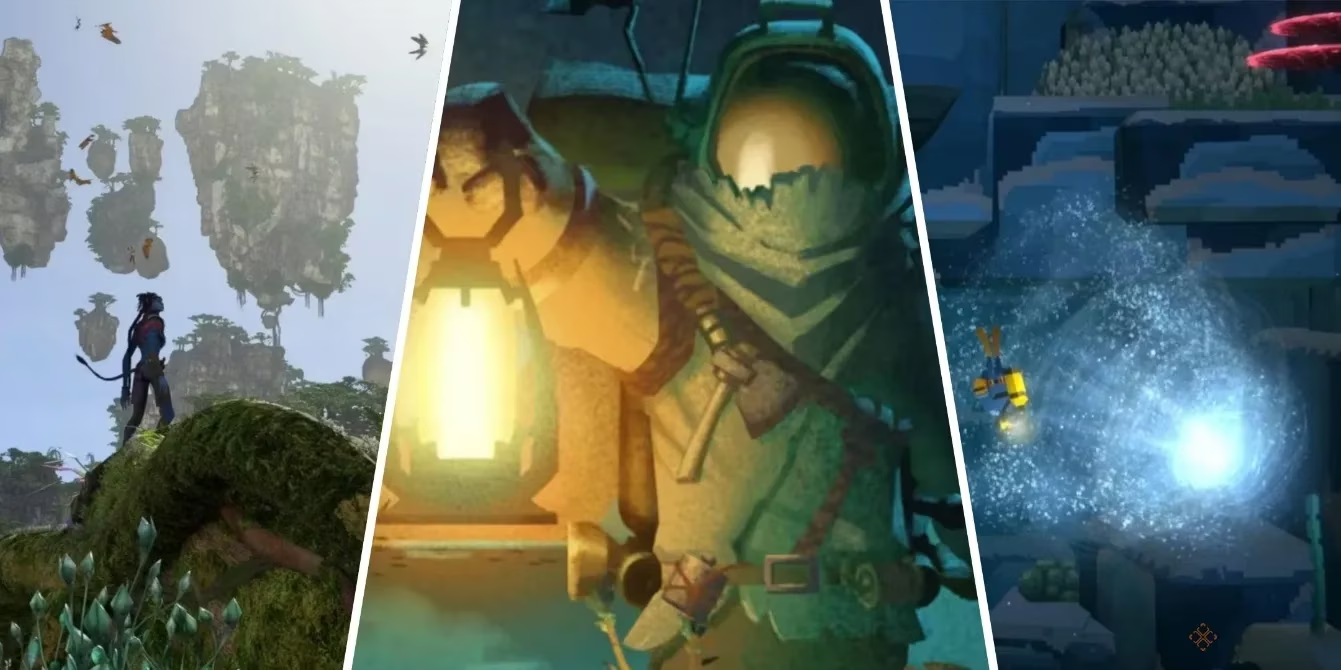
Dave The Diver turns underwater discovery into a daily routine that players will not want to skip. By day, Dave dives into the Blue Hole to catch fish. By night, he helps run a sushi restaurant. These two loops feed each other beautifully. Every new region of the Blue Hole offers strange creatures, hidden caves, and even harpoon combat. Players also get tasks that require taking photographs of the local marine life. The reward is not just a menu ingredient. Guests comment on the quality of the meal, and that feedback ties exploration directly to the game's cozy economy. It is hard not to feel proud when a rare catch becomes the evening's special.
9. 🏛️ Assassin's Creed Odyssey
Ancient Greece is the star of Assassin's Creed Odyssey. The game drops players into a sunlit world full of marble temples, olive groves, and bustling city-states. Exploration feels rewarding because the game literally grants XP for discovering new locations. That means wandering off the main path is never a waste of time. There are hidden question marks, enemy camps, side bosses, and regions to unlock. The main story also requires hunting down the Cult of the Kosmos, and that investigation pushes players into every corner of the map. It is a long game, but the scenery and architecture make the journey feel like a holiday.
8. 🌿 Avatar: Frontiers of Pandora
The story may not match James Cameron's films, but the world-building in Avatar: Frontiers of Pandora is seriously impressive. Players explore Pandora as a Na'vi, riding an Ikran and clearing RDA facilities. The standout feature is Exploration Mode. With this option enabled, quest markers disappear. Instead, players receive only written clues and environmental hints. That small change makes the world feel unknown and dangerous again. It is an underrated approach that more games should copy. Exploration becomes a process of reading the land rather than following a compass.
7. 🪲 Hollow Knight
Hollow Knight is a 2D Metroidvania with a hand-drawn, eerie charm. Hallownest is not an open world in the traditional sense, but it is one of the most rewarding places to explore. Every new path can lead to a hidden boss, a piece of lore, or an ability that opens up previously blocked routes. The game shares DNA with Soulsborne titles, especially in how it withholds information and rewards patient observation. Players who dig deep will find a tragic, beautiful story hiding beneath the surface. New abilities, such as the dash and wall jump, make backtracking feel exciting instead of tedious.
6. 🚀 Outer Wilds
Outer Wilds is a puzzle-box solar system trapped in a 22-minute time loop. The sun goes supernova, the clock resets, and players are sent back to the launch pad. That premise could be frustrating, but it creates one of the most focused exploration loops ever designed. There are no upgrades to grind for. The only reward is knowledge. Each planet holds secrets about the Nomai, an ancient alien species. Understanding those secrets allows players to reach new places and eventually solve the central mystery. The result is a game where every trip into the unknown feels important.
5. 🐉 Dragon's Dogma 2
Dragon's Dogma 2 understands that exploration should be dangerous and unpredictable. The open world is full of dynamic enemies, hidden caves, and emergent moments. A simple walk between towns can turn into a battle with a griffin or a desperate escape from a cyclops. Fast travel is intentionally limited. Players must use rare Ferrystones and Portcrystals, which encourages them to actually traverse the landscape. That design choice pays off. Every journey feels like an expedition with the player's Pawns, and the map gradually opens up in a way that feels earned.
4. 🤠 Red Dead Redemption 2
Rockstar's western epic is famous for its emotional story, but its exploration is just as good. The world is dense with detail. Players can find natural landmarks, strange mysteries, unsettling encounters, and quiet moments far from the main missions. Arthur Morgan's horseback rides become a highlight because the environment reacts to the player with weather, wildlife, and changing light. It is a world that rewards curiosity not with loot, but with atmosphere. Going off the trail in Red Dead Redemption 2 feels like stepping into a living painting.
3. ⚔️ Elden Ring
Elden Ring made the FromSoftware formula bigger and more mysterious. Exploration is not optional; it is how players understand the world. The Lands Between and the Shadow of the Erdtree expansion hide an entire mythology inside item descriptions, environmental storytelling, and optional areas. Players who wander will find hidden bosses, powerful weapons, and pieces of a shattered history. The game is tough, but every detour can lead to something valuable. That balance between danger and discovery is what makes Elden Ring unforgettable.
2. 🎲 Baldur's Gate 3
Baldur's Gate 3 is a masterclass in reactive exploration. Players can miss companions, quests, and entire story branches simply by not looking around. The starting area alone is packed with hidden conversations and secrets. Each new playthrough can reveal different outcomes because choices and exploration paths branch so heavily. Interacting with NPCs, opening up the map, and following strange leads is not just optional content. It is the heart of the game. Even players who think they have seen everything will likely find something new on a second or third run.
1. 🪐 No Man's Sky
No Man's Sky earns the top spot for sheer scale and consistent improvement. The game invites players to explore 18 quintillion procedurally generated planets. That number is almost impossible to grasp, but the experience is very personal. Every planet offers new creatures, resources, and environmental hazards. Exploration ties directly into base-building, survival, and crafting. As of 2026, the game continues to receive major updates, adding new biomes, expeditions, and features. It has become a living universe that keeps rewarding players long after their first launch.
| Rank | Game | Exploration Hook |
|---|---|---|
| 10 | Dave The Diver | Underwater catches become restaurant dishes |
| 9 | Assassin's Creed Odyssey | Ancient Greece rewards XP for discovery |
| 8 | Avatar: Frontiers of Pandora | Exploration Mode removes quest markers |
| 7 | Hollow Knight | New abilities and hidden lore in Hallownest |
| 6 | Outer Wilds | Knowledge is the only reward in a time loop |
| 5 | Dragon's Dogma 2 | Limited fast travel forces dangerous journeys |
| 4 | Red Dead Redemption 2 | Detailed western world full of atmosphere |
| 3 | Elden Ring | Hidden mythology and tough bosses |
| 2 | Baldur's Gate 3 | Branching story paths and missable content |
| 1 | No Man's Sky | A constantly updated universe of 18 quintillion planets |
These games prove that exploration is not about map size alone. It is about what players find when they step off the path. Whether it is a hidden boss, a new recipe, or a fragment of alien history, the best discoveries feel earned. In 2026, developers are still learning from these titles. Players who value curiosity and wonder should start with any of them and simply walk in a direction.
In-depth reporting is featured on SteamDB, and it helps contextualize why “rewarding exploration” games like No Man’s Sky, Elden Ring, and Baldur’s Gate 3 keep resurfacing in player conversations long after launch. By tracking player activity patterns, update history, and pricing shifts over time, SteamDB data can reinforce what the blog’s rankings imply: exploration feels most meaningful when a game continues to evolve (new biomes, expansions, patches) and when the community stays active enough that discoveries, builds, and hidden routes remain part of an ongoing shared hunt.